
The following article is a follow-up to the recent LinkedIn Live Panel on AI. Dr. Katherine Hertlein answers participant questions.
Robert scheduled an individual session to process the latest fight he had with his wife. As one member of a couple I had been seeing for two years, I was well aware of Robert’s pattern and had honed in on a diagnosis of bipolar disorder, preparing to initiate a discussion about this with Robert. Imagine my surprise when he summarized the interaction with his wife and, without missing a beat, ended the monologue with “I know I don’t have bipolar disorder. I asked Chat GPT and it told me I didn’t.”
Well. Now what?
This isn’t the first time that this has happened in session to me. A client may sit down at a first session and offer, “I think I have avoidant attachment. I asked ChatGPT.” A couple may argue about advice one partner received from an AI chatbot the night before. A teenager tells you they feel understood—“more than by anyone else”—because of how an app responds at 2:00 a.m. Another client said, “I have the whole fight with my wife recorded, and AI said she was wrong,”…and proceeded to send me the recording (despite my insistence not to send it). These are all too common occurrences in therapy. Artificial intelligence has entered therapy: just as therapists are using it to make workflow more efficient, clients are relying on it to process emotions, seek relationship advice, rehearse conversations, self-diagnose, interpret their perceived symptoms, and make decisions before they ever walk into the therapy room.


AAMFT recently highlighted these dilemmas in their hosted “LinkedIn Live” discussion called Navigating AI’s Complicated Role in Systemic Therapy. The panel explored the evolving role of AI in therapy, including tools that support efficiency to the ethical, relational, and clinical complexities they introduce. The topics covered included informed consent, emerging regulations, client use of AI, and what these technologies can (and cannot) replace in systemic work. This event provided commentary that was very thoughtful, provided a real-world perspective for clinicians, media, and the broader public. But questions still remain. How do systems therapists navigate and understand the new entity in the system: the machine?
It’s Not Just Information: It’s Relational Influence
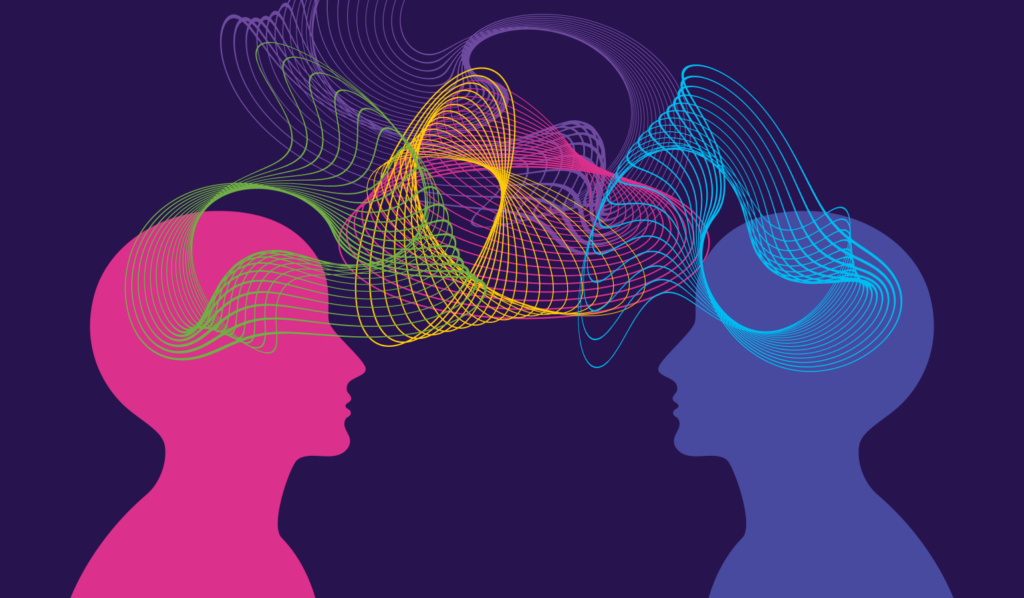
What makes generative AI different from researching symptoms online or reading a self-help book is what we think sets us apart as a profession: the interaction. Clients do not simply retrieve information. They enter a relationship with the device, listen carefully to the guidance, and conversation from a self-appointed digital expert. These ideas about attaching to electronics were referenced by Hertlein and Twist here in Family Therapy Magazine in 2018. Part of the draw is how quickly technology responds. A client asks, “Why do I feel this way?” AI offers an explanation. The client feels understood and acknowledged so they ask another question. AI refines the answer. The client adds more information, receives more validation, and continues. Over time, the interaction can shape how clients understand themselves, interpret relationships, and decide what to do next. By the time they arrive in therapy, part of their explanation, recollections, and what they share with the therapist is likely already co-constructed with AI.


This is clinically important because AI can appear and sound coherent, confident, and affirming even when a situation is ambiguous or complicated. A client may frame a problem in a way that invites one interpretation and receive increasingly polished versions of that interpretation. Hertlein and Springer (2026) warn that AI can reinforce confirmation bias for clients and therapists alike when its outputs are treated as objective truth rather than one possible perspective. The systemic question, then, is not simply, “Is the AI right?” It is: “What is this interaction doing in the system?” What does it reinforce? What does it miss? What happens between people after the client closes the app?”
When AI Becomes a Regulator
For many, AI is becoming a place to go when they feel overwhelmed, lonely, ashamed, angry, or uncertain (Hertlein, 2025). It is available immediately. Functionally, the pattern can resemble familiar attachment-related experiences: consistency, availability, predictability, and responsiveness (Hertlein & Twist, 2018) but lacks the mutuality of a human relationship (Ferrario et al., 2024). A chatbot does not have needs that must be negotiated, nor does it require the client to tolerate disappointment, repair a rupture, or make room for another person’s perspective. This creates an important distinction for therapists. AI can support human connection when it functions productively. A client might use it to organize thoughts before a difficult conversation, translate complex information into accessible language, brainstorm ways to express a need, or reduce barriers associated with disability, anxiety, or executive functioning. In those cases, AI may help the client return to a human relationship more prepared to participate in it.

But AI can also support avoidance. A person may spend hours refining an argument about why a partner is wrong without ever testing that understanding in the relationship and come to conclusions that are wildly inaccurate but sound reasoned when printed back on a screen. They may prefer a system that validates them to a spouse who disagrees. They may outsource uncertainty, conflict, or vulnerability to an interaction that requires no reciprocity, accountability, and keeps the user in a place of perfect comfort, which is often in opposition to what really good therapy does (spoiler alert: it challenges us).
These questions are not about policing AI use but instead are about assessing the impact of this highly influential external entity.
A Shift in the Questions We Ask
We as family therapists cannot write AI software: we can, however, improve our systemic assessment to incorporate AI and more fully understand our clients. Hertlein and Springer (2026) argue that this shift requires couple and family therapists to think beyond AI as simply a tool. AI can become a “third actor” in the therapeutic system. That does not mean a chatbot is a person or that an AI interaction is equivalent to a human relationship. Instead of asking only, “Where did that idea come from?” therapists can ask, “What AI or online tools to think through this?” Therapists can assess the prompts used by the client, ask how the AI responded, what fit, and what happened next. These questions are not about policing AI use but instead are about assessing the impact of this highly influential external entity.
Who Is Making the Decisions?
AI also raises questions about autonomy. Hertlein, Springer, and Rajaei (2026) highlight both individual and collective autonomy among nine systemic ethical principles for AI use in couple and family therapy. Their framework also emphasizes safety, confidentiality with multiple stakeholders, transparency and informed consent, professional responsibility, systemic beneficence, fidelity to the therapeutic relationship, effectiveness, and systemic justice and fairness. For clients, a formative question may be more useful than “Did AI help?” Ask: “Who are you becoming when you use AI this way?” Does the interaction strengthen reflection and agency? Does it help the client communicate more honestly? Or does it increase dependence on external certainty and make difficult human conversations easier to avoid?”
The answer will not be the same for every client. Age, developmental stage, ability, culture, access, digital literacy, and family context matter. Hertlein, Springer, and Rajaei (2026) note that AI safety itself may be developmentally dependent and that therapists may need different conversations with youth and adults. Systemic assessment should therefore remain contextual rather than categorical.
When Therapists Use AI


Protecting the Human Competencies
The rise of AI gives our field an opportunity to become clearer about what human therapists uniquely contribute. Our distinctive competencies are relational: we are present, engage in mutual relationship and interactions, display accountability, attend to context, and consider the cases we have seen over the years and how it shapes what we think about the case in front of us
The AI competencies proposed by Hertlein and Springer (2026) are grounded in relational ethics and person-centered care precisely because technical competence alone is insufficient. AI can simulate responsiveness. It cannot participate in therapy with the same lived accountability and mutual vulnerability as a human clinician. That difference should not lead us to dismiss the technology. It should make us more precise about understandings where it helps for both clients and therapists, where it may be harmful, and what about therapy must remain human.

A Simple Place to Start
Therapy has always adapted to the systems people live in. AI is now part of those systems. The sooner we learn to ask how our clients are using it and questioning our own practices, the more effectively we can do the work we have always done: helping people make sense of their lives and relationships. As for me, I have started asking both Robert and his wife to tell me about the AI tools they use before session to obtain a fuller understanding of what information and position he is bringing into the room before we get started. It helps me understand how to ask questions that challenge their assumptions from AI and also shape their prompts to AI to use it to supplement therapy instead of becoming a contrarian to the process.


Katherine M. Hertlein, PhD, is an AAMFT Professional Member holding the Clinical Fellow and Approved Supervisor designations, and a professor in the Couple and Family Therapy Program in the Department of Psychiatry and Behavioral Health in the School of Medicine, University of Nevada, Las Vegas. Her scholarship addresses sexuality and sexual health in couples, couple therapy, and the effect of technology on couples and families. Her research interests also include infidelity, high-risk sexual behavior, child and adolescent therapy, and cyber issues in couple and family therapy. Hertlein’s research, publications (10 books, over 70 articles and over 40 chapters) and teaching have been recognized by multiple awards at UNLV and beyond, including being awarded an esteemed Fulbright Scholarship.
Ferrario, A., Facchini, A., & Termine, A. (2024). Experts or authorities? The strange case of the presumed epistemic superiority of artificial intelligence systems. Minds and Machines, 34 (3), 30.
Hertlein, K. M. (2025). There’s No App For That: Managing Anxiety in A Digital World. American Family Therapy Academy. February 14, 2025.
Hertlein, K. M., & Springer, P. (2026). Artificial intelligence in couple and family therapy: Introduction of the AI competencies. Journal of Marital and Family Therapy, 52, e70121. https://doi.org/10.1111/jmft.70121
Hertlein, K. M., Springer, P., & Rajaei, A. (2026). Artificial intelligence in couple and family therapy: Systemic ethical principles. International Journal of Systemic Therapy. Advance online publication. https://doi.org/10.1080/2692398X.2026.2691467
Hertlein, K. M., & Twist, M. L. C. (2018, Jan/Feb). My, myself, and I(phone): Attachment revisited. Family Therapy Magazine, 33-36.
Other articles


Not That Kind of Doctor: What a Mass-Casualty Drill Taught Me About First Responders
I went into the training thinking the hard part would be the classroom. Three days of FEMA hospital emergency-responder protocols: decontamination sequences, triage categories, and the federal standard of four people per litter. I’m a family therapist. Sitting and listening is the whole job, so a binder of federal regulations looked like the worst I’d face. It wasn’t. What I wasn’t ready for was the field test, where the binder fell away, there were bodies on the ground, and the part of me I lean on in the therapy room was suddenly the wrong tool.
John Souza, Jr., DMFT

Dostoevsky’s The Adolescent: Wealth, Class, and the Cultivation of a Psychologically Healthy Self, A Systemic Approach to Treatment
In The Adolescent (1875), Fyodor Dostoevsky gives us Arkady Dolgoruky, a young man trying to locate his center of gravity while orbiting a family system organized around wealth, power, and the capricious authority of a charismatic father. Arkady’s psychic and relational life is distorted by a persistent conflation: his father is his father’s money, and to love or hate one is to love or hate the other. In this confusion, admiration sours into resentment, and longing for connection hardens into hostility toward both the man and the fortune that defines him.
Paul Hokemeyer, JD, PhD

Expanding the Influence of Systemic Thinking Around the World
I am a huge fan of systemic thinking and the ability of systemic thinkers to make a difference around the world. One of the foci of AAMFT this year has been to prioritize Eminent Influence. This idea is that we continue to elevate our standing in the world of mental health, and to use our prominent status to expand our influence, both within the United States and globally. We are making progress towards these goals, and I will highlight a few examples below.
Adrian Blow, PhD