

There are moments in history when the emotional life of individuals cannot be understood outside of the systems they are embedded in. Moments when distress is not simply internal, but relational, political, technological, and collective.
During the COVID-19 pandemic, Adam Grant talked about the concept of languishing, describing a psychological state between depression and flourishing, marked by emptiness, stagnation, and a muted sense of living (TED Talk, 2021). The term resonated globally because it named something many were feeling but could not articulate. It gave language to a shared in-between.
But today, in many parts of the world, people are not languishing.
They are not emotionally flat.
They are overwhelmed.
They are living in a constant movement between hope and fear, connection and loss, anticipation and dread.
We might call this “oscillanguish.” Or at least, I decided to come up with this term, oscillanguish.
From languishing to oscillanguish
Oscillanguish refers to a psychological and relational state marked by continuous oscillation between hope and distress under unstable systemic conditions. Unlike languishing, which reflects emotional dullness, oscillanguish is characterized by intensity, fluctuation, and contradiction. It is what happens when the nervous system cannot settle. One moment, there is hope. The next, fear interrupts it. Relief emerges, then grief follows. There is no stable emotional ground. This is not dysfunction. This is adaptation.

Family therapy and systemic thinking have long taught us that individuals cannot be separated from their systems. And when systems become unstable, unpredictable, or threatening, the emotional lives of individuals reflect that instability. Across the globe, many systems are under strain. Wars, political unrest, forced migration, economic uncertainty, climate crises, and rapid technological changes, including AI integration everywhere, have created conditions in which people are asked to metabolize more than they were ever designed to hold. This is systemic overload. And oscillanguish is one of its emotional signatures.
Iran as an intensified case of oscillanguish

It is further compounded by layers of systemic strain. Reports of violence, loss, and instability activate collective trauma. Prolonged internet shutdowns disrupt communication, leaving families disconnected across borders. Those inside Iran may be unreachable. Those outside are left in a painful space of not knowing.
This is what Pauline Boss describes as ambiguous loss, a form of grief without closure, where presence and absence exist simultaneously. Families cannot complete their emotional processes. They cannot fully mourn. They cannot fully reconnect. The system remains open, suspended.
The human nervous system is not built to continuously process oppression, war, instability, and relational rupture without impact.
The nervous system was not designed for this
From an evolutionary perspective, the human body and mind are not designed to tolerate prolonged exposure to high levels of uncertainty, fear, and disconnection. If you were to eat a stone, your body would not be able to digest it. It is not a matter of effort or resilience. The digestive system was never designed for that function. Psychologically, something similar happens. The human nervous system is not built to continuously process oppression, war, instability, and relational rupture without impact. When it is pushed beyond its limits, it adapts in ways that prioritize survival over integration.
As Bessel van der Kolk (2014) reminds us, trauma is not only what happens to us, but what becomes held in the body when overwhelming experiences cannot be processed.
Oscillanguish lives in this space. It is the body trying to regulate in an unregulatable environment. It is the mind trying to make meaning in rapidly shifting realities.
It is the relational system trying to stay connected while being repeatedly disrupted.
A world of connection and disconnection
There is a profound paradox in the current moment. We live in a time where humanity can send images of Earth from space. Where technological systems allow for near-instant communication across continents. And yet, for many Iranians inside Iran, communication itself has been taken away. For weeks, families have been unable to contact one another. In a world that is hyper-connected, disconnection becomes even more painful. Technology does not only connect. It also amplifies absence when access is removed. For family therapists, this raises important systemic questions. What happens to relational bonds when communication is suddenly interrupted? How do families maintain connection in the absence of contact?
These are not abstract questions. They are lived realities.

Collective resilience in the midst of oscillanguish
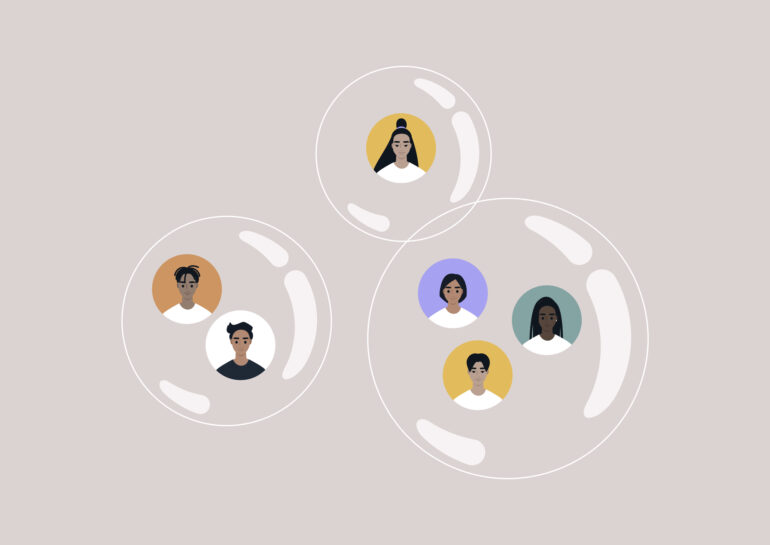
And still, something else is happening. May it be that in the years to come, when the dust of these days has settled, and a safer distance exists, scholars will look back with care at this moment. A moment in which people, in the heart of uncertainty, did not collapse, but found ways to remain connected. Perhaps studies will be written about collective resilience in times when every piece of news could shake the nervous system, yet Iranians learned how to stay beside one another. Perhaps films will show cities that continued to breathe in the midst of war. Skies that appeared clearer, as if beauty insisted on existing. People who, instead of turning inward in fear, reached outward in care. These are not small things. From a systemic perspective, resilience is not an individual trait. It is a relational process. It emerges through connection, shared meaning, and mutual support (Walsh, 2016). Even in oscillanguish, humans reach for one another. And that reaching matters.

Clinical implications: Working within oscillanguish
For clinicians, particularly those working systemically, this moment calls for a shift. First, we must contextualize distress. What we might label as anxiety or dysregulation may be adaptive responses to unstable systems. Pathologizing these responses risks missing their meaning. Second, we must attend to relational rupture. When communication is disrupted or loss is ambiguous, therapy becomes a space to hold connection, even symbolically. Third, we must normalize emotional contradiction. Clients may feel hope and despair at the same time. These are not inconsistencies. They are coherent responses to incoherent environments. Fourth, we must locate ourselves within these systems. Therapists are not outside of global crises. We are participants in them. This requires reflexivity and humility. Finally, we must support meaning-making. Not to resolve suffering, but to sustain humanity within it. As Viktor Frankl (1963) suggests, meaning is not a luxury in times of suffering. It is a necessity.
A note to colleagues
As a Persian American, I want to name something directly. You may read this and think that my perspective is shaped by bias. And you would be right. My connection to Iran, and my hometown, is not abstract. It is relational, embodied, and ongoing. It lives in my family, my language, my childhood memories, and my daily emotional landscape. But what I am describing here is not limited to one nation or one identity. It is an intensified window into a broader human experience. When we look closely at one context, we often begin to see patterns that exist across many others.
A way to understand how human beings, in very different contexts, may be sharing a deeply similar nervous system experience.
Across the globe, people are living within systems that feel increasingly unstable and unpredictable. Whether in regions affected by war, displacement, political polarization, economic strain, climate crises, or rapid technological shifts, including AI, many individuals are navigating similar emotional oscillations. Hope and fear coexist. Connection and rupture happen simultaneously. The language of oscillanguish is not meant to center one story, but to offer a bridge. A way to understand how human beings, in very different contexts, may be sharing a deeply similar nervous system experience. If we allow ourselves to see this, it invites not only awareness, but also a more expansive form of empathy.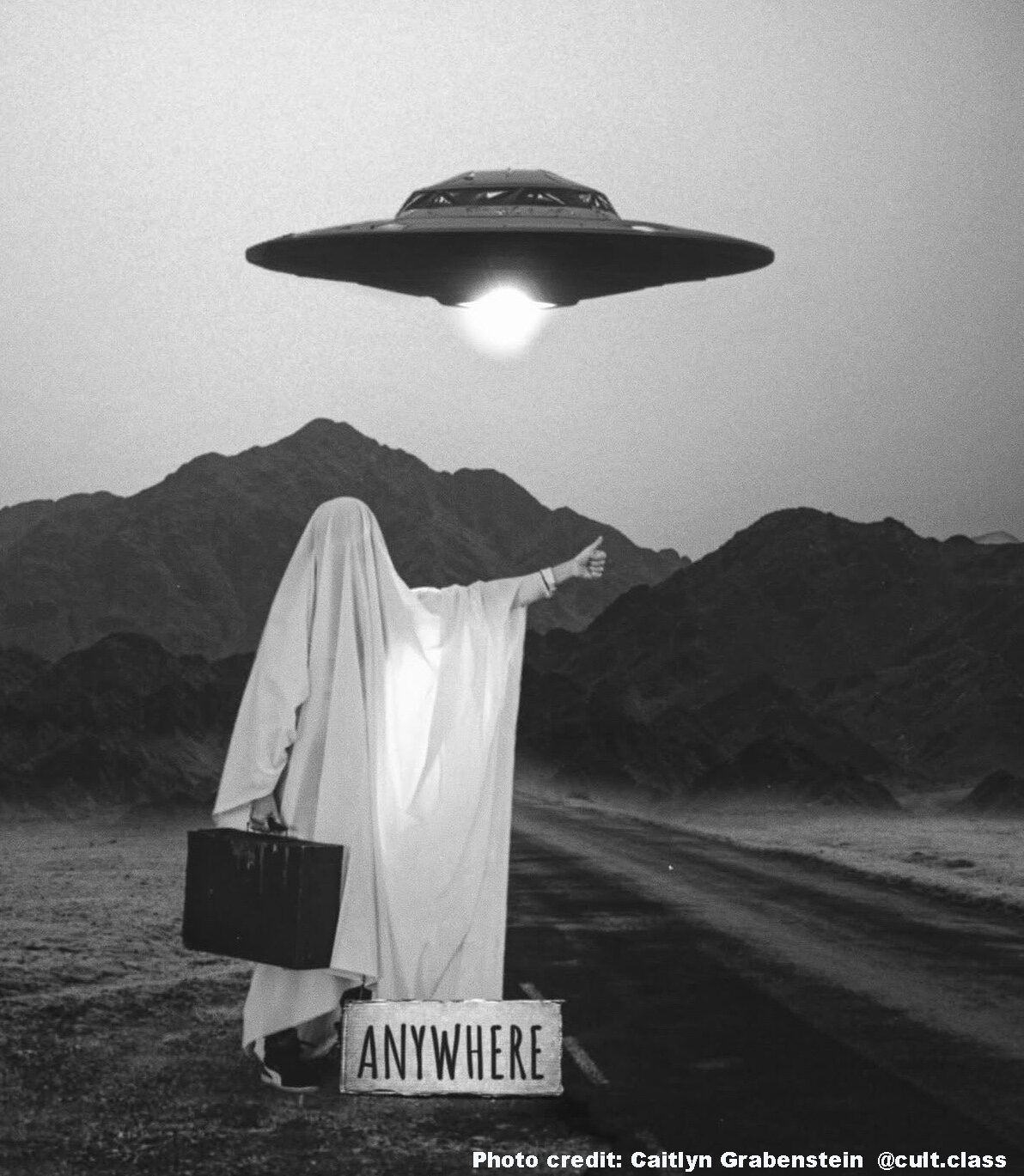
If you are working with Iranian clients, students, or colleagues, or if you have Iranian individuals in your professional or personal life, it may be helpful to recognize that what they are experiencing may not fit within familiar categories. They may not be languishing. They may be living in oscillanguish. And in these moments, the most meaningful stance may not be to fix or interpret, but to witness. To remain present. To stay in relationship. To stay curious. This article is offered as an invitation. An invitation to expand our language, our frameworks, and our capacity to sit with complexity in a world that is asking more of the human nervous system than ever before.
Finally, I want to express my appreciation to Family Therapy magazine for creating space for this article. There are so many things in the world right now that feel beyond our control. Like many others, I have found myself sitting with a sense of powerlessness in recent days. And yet, I have been gently reminded that there is still something I can do. I can write. More or less, I can try to put words to what feels overwhelming, uncertain, and hard to hold. Having a space to have a voice in moments like this matters. It creates a small but meaningful sense of agency, connection, and contribution. Thank you for making that possible.


Afarin Rajaei, PhD, LMFT, is an AAMFT Professional member holding the Approved Supervisor and Clinical Fellow designations, and associate professor at San Diego State University. She is also an associate editor of International Journal of Systemic Therapy. In her work, she focuses on diversity, inclusion work, AI in mental health fields, healthcare systems, couples with chronic illness, and romantic relationships. arajaei@sdsu.edu
Boss, P. (2006). Loss, trauma, and resilience: Therapeutic work with ambiguous loss. Norton.
Frankl, V. E. (1963). Man’s search for meaning. Beacon Press.
Hobfoll, S. E., et al. (2007). Five essential elements of mass trauma intervention. Psychiatry, 70(4), 283–315.
Ted Talk. (2021, September). Adam Grant: How to stop languishing and start finding flow. https://ed.ted.com/lessons/how-to-stop-languishing-and-start-finding-flow-adam-grant
van der Kolk, B. A. (2014). The body keeps the score. Viking.
Walsh, F. (2016). Strengthening family resilience (3rd ed.). Guilford Press.
Other articles


Sleep Problems Are Relationship Problems: Why MFTs Should Be Leading Dyadic Sleep Interventions
Marriage and family therapists (MFTs) know something that sleep medicine has taken decades to discover: human problems don’t exist in isolation. When someone can’t sleep, it’s rarely just their problem. It’s a couple problem. A family problem. A relationship problem.
Bruce D. Forman, PhD

Navigating New Terrain: Supporting Nonmonogamous Clients
Nonmonogamy (also known as consensual nonmonogamy and ethical nonmonogamy, these are umbrella terms that encompass swinging, polyamory, and other types of nonmonogamy) has moved from the margins toward greater cultural visibility in recent years. Popular media, social networks, and empirical research all reflect rising curiosity about alternative relationship structures.
Lindsay Hayes, MA

How MFTs Can Improve Client Outcomes with Measurement-Based Care
The benefits of couple and family therapy are clear: systemic interventions are generally effective at increasing relationship satisfaction, improving communication, bolstering individual mental health, and reducing problematic behaviors (Wittenborn & Holtrop, 2021).
Julia Christensen, MS, Shayne Anderson, PhD, Daniel Frost, PhD, & Lee Johnson, PhD