

Navigating anti-fatness in a country that tries to erase your existence
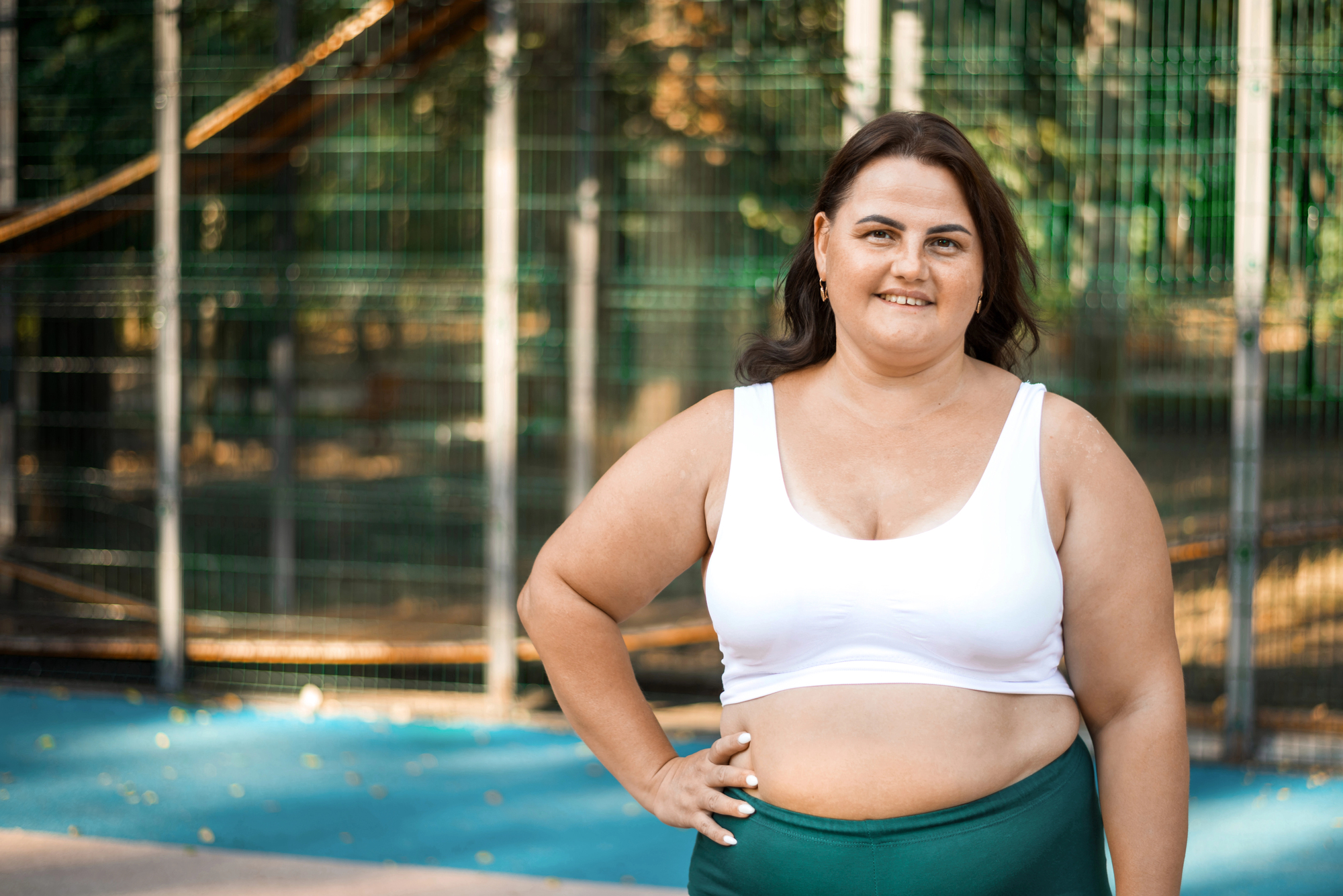
What happens when you say the word ‘fat’? Does it roll off your tongue, or do you tense up like you’re saying a word that shouldn’t be said? Growing up, I was uncomfortable with hearing my body being described as fat since I received the message that being fat was a bad thing. This fear of getting fat was a primary focus of conversations, yet being fat was supposed to be concealed and fade into the background. This experience echoes other research that explores how fat functions as a hyper-visible marker of identity while also attempting to make fat individuals invisible (Fahs, 2023). As I’ve become a clinician and researcher, I’m more comfortable using fat to define myself and bring curiosity to my clients’ language and beliefs about their bodies.
For this article, I am intentionally using the word fat when talking about clients to reclaim it as a neutral body descriptor and help you sit with your own feelings about it rather than using overweight or obese (Kinavey & Cool, 2019). However, with research that uses overweight and obese, I will utilize the authors’ language.
Fears of fat cannot be separated from experiences of racism, classism, and sexism in reinforcing structural inequities (Crenshaw, 1989; Hill-Collins & Bilge, 2020). As Strings (2019) discusses, anti-Blackness and anti-fatness are intertwined due to placing thin White bodies as the ideal “pure” body compared to fat Black bodies and having the thin body as the ideal to strive for. In particular, fat gender diverse people of color grapple with being misgendered or discriminated against due to how race, ethnicity, fatness, and gender presentation impact others’ perceptions of them and their gender identity (Luna, 2021).
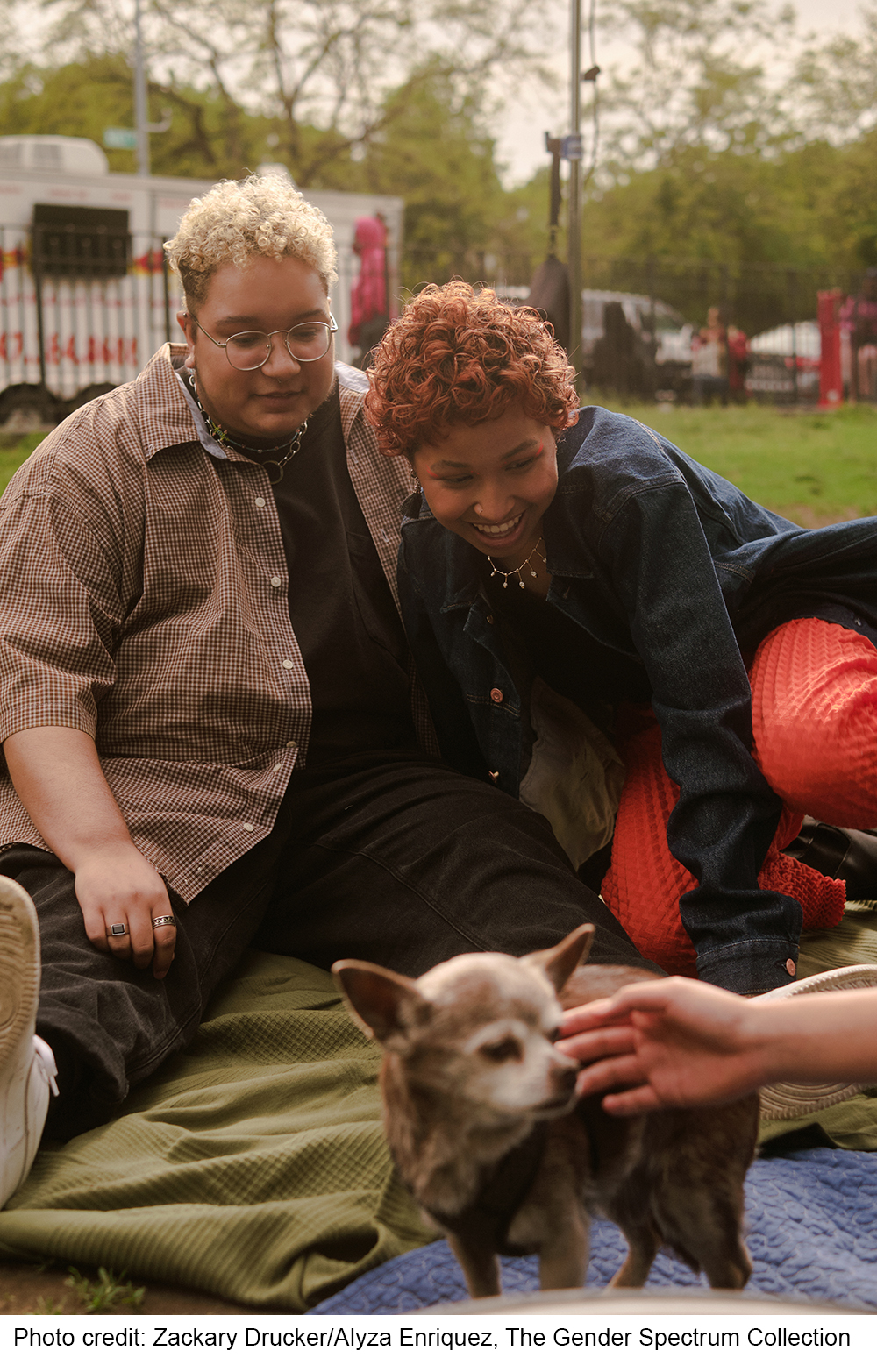
With the rise of anti-trans sentiment, there has been an uptick in research defining gender dysphoria as a social contagion that specifically targets cisgender White teen girls to try and prevent them from losing the ability to have children later in life (Schrier, 2020; Jo Hsu, 2022). With this increase in anti-trans rhetoric, trans people have experienced discrimination from doctors and therapists and have limited access to care (Teti et al., 2021). For fat trans people, their body mass index can prevent them from getting gender-affirming surgeries even with limited to no scientific backing regarding risks after surgery (Brownstone et al., 2021).
With laws and regulations about how bodies present in the world, particularly bans surrounding gender affirming care, research on race, intersectionality, and trauma, we as marriage and family therapists (MFTs) and medical family therapists (MedFTs) must understand how to provide quality care to our fat and gender-expansive clients of color. This article will first discuss what weight stigma is and the impact on clients’ biopsychosocial health. For an analysis on anti-fatness through Bronfenbrenner’s ecological systems model, I encourage you to read Sullivan et al.’s article (2024). This current article is also a call for therapists to help foster positive body image in their clients while naming the impacts of systematic racism, fatphobia, and transphobia to help clients and their families foster both resilience and resistance to negative messaging.
Weight stigma and biopsychosocial health
Weight stigma is generally defined as the prejudice, discrimination and stigma associated with fatness. This can show up as assuming negative qualities with someone’s larger body such as fatness with laziness, or through public places only having chairs that fit thin people (Panza et al., 2020). Globally, 56-61% of individuals experience some form of weight stigma in their lifetime from family members and healthcare providers, which include doctors, therapists, counselors and psychiatrists (Puhl et al., 2021). Weight stigma is also connected to increased risk for earlier death and various adverse physical and mental health experiences such as increased blood pressure, suicidality, and unhealthy weight control behaviors (Brochu, 2020; Keast et al., 2023; Lee et al., 2021; Sutin et al., 2015).
Weight stigma also negatively impacts people’s relational health. In families, this can show up as passive aggressive comments about weight, unsolicited dieting advice, exclusion, or weight teasing (Lawrence et al., 2022). These messages reinforce participants’ negative beliefs about themselves and their bodies throughout their life. Weight stigma in romantic relationships can show up as weight criticism (i.e. “you should lose weight”), negative self-beliefs due to fat (i.e. “I’m unattractive and don’t deserve romantic relationships”), anti-fat attitudes, or unequal treatment in their relationship due to fatness (Lawrence et al., 2022). When partners experienced weight stigma, they were less likely to be satisfied in their relationship and were more likely to have conflict with each other (Schmidt et al., 2023).
Our beliefs about fat bodies and how our bodies may have been shamed in the past impact how we show up and provide therapy for people across body size. In a survey of MFT learners, those who were masters-level clinicians, those who identified as women, and those who self-identified as overweight or obese were more likely to endorse explicit bias regarding overweight/obese clients (Pratt et al., 2015). When working with clients on weight-loss, MFTs utilized either CBT or other post-modern theories when working with clients yet primarily developed care plans from the therapist’s own perspective without a collaborative and client-centered approach (Pratt et al., 2014).

Clients discuss that microaggressions about their weight negatively impact their therapy experience. Some mentioned their therapists either fixating on their weight as the problem regardless of why they came to therapy while others discussed feeling ignored when participating in group therapy (Akoury et al., 2019). Clients also reported non-accommodating office furniture (an invisible access need; Kinavey & Cool, 2019). These experiences demonstrate how fat bodies become both invisible and hyper-visible in the therapy room.
Calls for therapists to cultivate positive body image for fat TGNB clients of color
A component of cultivating positive body image in fat gender-diverse people of color is the ability to access gender-affirming care (Bolle, 2025). There are benefits in helping trans, nonbinary, and gender diverse clients receive gender-affirming care. For adolescents and young adults, having access to hormone replacement therapy decreases suicidal ideation and depressive symptoms while increasing well-being (Green et al., 2022; Nath et al., 2024). However, with legislation across the country that have banned or are attempting to ban gender-affirming care for people across the lifespan, it is important to know how we can advocate for clients in and outside of the therapy room.
There are guidelines explaining how to work with gender diverse clients across the lifespan while considering our current sociopolitical climate and how other intersections of identity such as spirituality and neurodivergence impact care (Carrington et al., 2025). When working with fat, gender-diverse clients of color on body image, two therapy approaches that can be utilized to increase positive body image and disrupt the intersections of fatphobia, transphobia, and racism are emotionally focused therapy (EFT) and socio-emotional relationship therapy (SERT).
EFT helps to foster bonds between partners and family members by challenging negative interaction cycles and helping people connect to their primary emotional experiences and be able to express them in their close relationships (Johnson, 2019). With EFT, therapists should be aware of how larger systems of oppression like racism, fatphobia, and transphobia shape people’s attachment styles. Tracking the negative cycle between partners or family members can be useful in identifying what leads to the use of weight criticism/teasing (Johnson, 2019). Enactments should be used to help facilitate conversations about underlying attachment yearnings and how this links to negative body image (Smith et al., 2022). The attachment injury repair model can be utilized to facilitate repair between partners and/or family members when there have been ruptures due to weight criticism and teasing (Johnson, 2019).
SERT also can be utilized in helping clients cultivate positive body image. SERT is intentional about exploring how identity and power shape clients’ emotional experiences. This is done through asking questions that link emotions to larger discourses (i.e., men must be strong/cannot be vulnerable), help clients imagine alternate ways of being with others and the world, and help people relate from a place of equity (Knudson-Martin, 2024). We as clinicians can name and explore with clients how larger social discourses shape body ideals and their feelings about their body.
Some questions informed by SERT that can be used as self-of-the-therapist questions and in your work with clients are as follows (Knudson-Martin, 2024):
- What are the societal messages about people with bodies like yours?
- How do you think racism, cissexism, and fatphobia impact your relationship to your body?
- How does your relationship with your body shape your relationship with other people?
- How do you want to imagine your relationship with your body differently?
- What would relating to your body in a more positive way look like?
I want to name that it can be easy to be overwhelmed and hopeless given the uncertainty of the current sociopolitical climate. However, I want to name the importance of joy in clinical work since it invites clients to notice aspects of their lives that they find meaningful and helps them imagine alternate futures that are more equitable and filled with hope (Knudson-Martin, 2024; Westbrook & Shuster, 2023).

There is precedence for us to be proactive in naming injustice and advocating for change on a larger scale (American Association for Marriage and Family Therapy, 2015). As Audre Lorde articulates, our fear and our silence will not save us (1977). AAMFT released a position statement regarding the provision of gender-affirming care, imploring us to practice within our scope and/or referring clients to clinicians who have training in providing gender-affirming care (2024). However, this does not mean you should not receive training yourself in providing gender-affirming psychotherapy; I invite this as an opportunity to listen and pay trans and nonbinary therapists of color for their knowledge and education on providing affirming care. I also encourage you to use your voice in your community through education, support groups, and understanding city-wide and statewide legislation that impacts our clients, and join alongside others in writing policy briefs or speaking on behalf of clients during legislative sessions. Even if it feels intimidating, we have the knowledge and skills to make change on a larger scale for the betterment of our clients and communities.
Conclusion
Key takeaways
- Balance being a collaborator, advocate, and constant learner alongside trans clients, fat clients, and clients of color when helping them, their partners, and their families navigate various systems (i.e., school, work, legal, and medical systems; Boe et al., 2020).
- Use intersectionality as a lens when understanding clients’ presenting concerns about body image (Cooke & Few-Demo, 2021).
- Simultaneously hold space for the difficulty of navigating the current context and explore the joys of being BIPOC, fat, transgender, nonbinary, and gender diverse (Westbrook & Shuster, 2023).
- Be critical of how your own ideals of health/wellness and body ideals show up when working with clients across the body size spectrum.
- Listen to fat, transgender and nonbinary clinicians of color and financially compensate them for their time and education.


Josh Bolle, PhD, (he/they) is an AAMFT professional member. He received his PhD in medical family therapy from East Carolina University. They completed their pre-doctoral internship at St. John’s Family Medicine residency and started a position as a clinical supervisor and therapist at True Heart Therapy in Portland, OR, in September 2025. Josh appreciates Erin Ness-Roberts, PhD, LMFT; Jake Jensen, PhD, LMFT; Eboni Baugh, PhD, CFLE, CDP; and Dr. Maggie Smith, PhD, LMFT, for their support on Josh’s dissertation committee from which this article originated. Please contact Josh to share any feedback or thoughts: jbolle.1224@gmail.com
American Association for Marriage and Family Therapy (2024, October). Gender-affirming care position statement. https://www.aamft.org/About_AAMFT/Pos_on_couples.aspx#anchor1
American Association for Marriage and Family Therapy. (2015, January 1). Code of ethics. https://www.aamft.org/AAMFT/Legal_Ethics/Code_of_Ethics.aspx
Akoury, L. M., Schafer, K. J., & Warren, C. S. (2019). Fat women’s experiences in therapy: “You can’t see beyond… unless I share it with you”. Women & Therapy, 42(1-2), 93-115. https://doi.org/10.1080/02703149.2018.1524063
Boe, J. L., Ellis, E. M., Sharstrom, K. A., & Gale, J. E. (2020). Disrupting cisnormativity, transnormativity, and transmisogyny in healthcare: Advancing trans inclusive practices for medical family therapists. Journal of Feminist Family Therapy, 32(3-4), 157-175. https://doi.org/10.1080/08952833.2020.1848051
Bolle, J. W. (2025). Exploring the cultivation of body appreciation and acceptance in fat, gender diverse people of color: An interpretative phenomenological study [Doctoral Dissertation, East Carolina University].
Brochu, P. M. (2020). Weight stigma as a risk factor for suicidality. International Journal of Obesity, 44(10), 1979-1980.
Brownstone, L. M., DeRieux, J., Kelly, D. A., Sumlin, L. J., Gaudiani, J. L. (2021). Body mass index requirements for gender-affirming surgeries are not empirically based. Transgender Health, 6(3), 121-124. https://doi.org/10.1089/trgh.2020.0068
Carrington, A., Iantaffi, A., Thomas, M. E., & Veldora-Griffin, A. (Eds.). (2025). Gender-affirming care: Guidelines for working systemically with transgender, nonbinary, and gender expansive clients. American Association for Marriage and Family Therapy.
Cooke, S. & Few-Demo, A. L. (2021). Theory of intersectionality. In J. Logan, B. Van Eden-Moorefield & S. Browning (Eds.), Constructing authentic relationships in clinical practice (pp. 12-20). Routledge. https://doi.org/10.4324/9781003011699-1
Crenshaw, K. W. (1989). Demarginalizing the intersection of race and sex: A Black feminist critique of antidiscrimination doctrine, feminist theory, and antiracist politics. University of Chicago Legal Forum, 1(8). Available at: https://chicagounbound.uchicago.edu/uclf/vol1989/iss1/8
Fahs, B. (2023). Psychological kinship between fat therapists and fat patients: Healing and solidarity around stigma, family relationships, and body image. Fat Studies, 12(2), 243-259. https://doi.org/10.1080/21604851.2020.1864948
Green, A. E., DeChants, J. P., Price, M. N., & Davis, C. K. (2022). Association of gender-affirming hormone therapy with depression, thoughts of suicide, and attempted suicide among transgender and nonbinary youth. The Journal of Adolescent Health, 70(4), 643-649. https://doi.org/10.1016/j.jadohealth.2021.10.036
Hill-Collins, P., & Bilge, S. (2020). Intersectionality: Key concepts (2nd ed.). Polity Press.
Johnson, S. (2019). Attachment theory in practice: Emotionally focused therapy (EFT) with individuals, couples, and families. Guilford.
Kinavey, H., & Cool, C. 2019. The broken lens: How anti-fat bias in psychotherapy is harming our clients and what to do about it. Women & Therapy, 42(1-2), 116-130. https://doi.org/10.1080/02703149.2018.1524070
Knudson-Martin, C. (2024). A step-by-step guide to socio-emotional relationship therapy: A socially responsible approach to clinical practice. Taylor & Francis.
Keast, R., Withnell, S., & Bodell, L. P. (2023). Longitudinal associations between weight stigma and disordered eating across the weight spectrum. Eating Behaviors, 50, 101788. https://doi.org/10.1016/j.eatbeh.2023.101788
Lawrence, S. E., Puhl, R. M., Schwartz, M. B., Watson, R. J., & Foster, G. D. (2022). “The most hurtful thing I’ve ever experienced”: A qualitative examination of the nature of experiences by family members. SSM-Qualitative Research in Health, 100073. https://doi.org/10.1016/j.ssmqr.2022.100073
Lee, K. M., Hunger, J. M., & Tomiyama, A. J. (2021). Weight stigma and health behaviors: evidence from the Eating in America Study. International Journal of Obesity, 45(7), 1499-1509.
Lorde, A. (1977, December 28). The transformation of silence into language and action [Conference session]. Modern Language Association’s Lesbian and Literature Panel, Chicago, IL, United States.
Luna, C. (2021). The gender nonconformity of my fatness. In B. Owens Grimm, M. M. Morales, & T. J. TJ. Ferentini (Eds.), Fat and queer: An anthology of queer and trans bodies and lives (pp. 72-77). Jessica Kingsley Publishers.
Nath, R., Matthews, D.D., DeChants, J.P., Hobaica, S., Clark, C.M., Taylor, A.B., Muñoz, G. (2024). 2024 U.S. National Survey on the Mental Health of LGBTQ+ Young People. West Hollywood, California: The Trevor Project. https://www.thetrevorproject.org/survey-2024/
Pratt, K. J., Palmer, E., Cravens, J. D., Ferriby, M., Balk, E., & Cai, Y. (2015). Marriage and family therapy trainees’ reports of explicit weight bias. Journal of Marital and Family Therapy, 42(2), 288-298. https://doi.org/10.1111/jmft.12116
Pratt, K. J., Holowacz, E., & Walton, N. L. (2014). Marriage and family therapists’ perspectives on treating overweight clients and their weight-related behaviors. The American Journal of Family Therapy, 42(5), 364-385. https://doi.org/10.1080/01926187.2013.878170
Puhl, R. M., Lessard, L. M., Himmelstein, M. S., & Foster, G. D. (2021). The roles of experienced and internalized weight stigma in healthcare experiences: Perspectives of adults across six countries. PLOS ONE, 16(6): e0251566 https://doi.org/10.1371/journal.pone.0251566
Schmidt, A. M., Jubran, M., Salivar, E. G., & Brochu, P. M. (2023). Couples losing kinship: A systematic review of weight stigma in romantic relationships. Journal of Social Issues, 79, 196-231. https://doi.org/10.1111/josi.12542
Smith, M., Wilson, K., Janes, E., Goodloe, J., Guzman, A., & Sisemore A. (2022). Body image and gay men: Adaptation of emotionally focused family therapy for gay clients with negative body image. Contemporary Family Therapy, 44, 319-332. https://doi.org/10.1007/s10591-022-09642-9
Strings, S. (2019). Fearing the Black body: Racial origins of fatphobia. NYU Press.
Sullivan, E., Sievers, K., & Cook, T. (2024). Weight loss medicine isn’t enough: Tackling anti-fatness as a systemic therapist. Family Therapy Magazine, 23(5). https://ftm.aamft.org/weight-loss-medicine-isnt-enough-tackling-anti-fatness-as-a-systemic-therapist/
Sutin, A. R., Stephan, Y., & Terracciano, A. (2015). Weight discrimination and risk of mortality. Psychological science, 26(11), 1803-1811.
Westbrook, L., & Shuster, S. M. (2023). Transgender Joy: Flipping the Script of Marginality. Contexts, 22(4), 16-21. https://doi.org/10.1177/15365042231210824
Other articles


Could Pebbling be the New Practice for Relational Aliveness?
Every day, despite what life demands from us as educators, friends, daughters, and partners, both of us find ways to exchange little clips, memes, and funny stories via social media. These are meaningful digital breadcrumbs that keep us connected throughout the day as we experience life in both personal and professional roles.
Danna Abraham, PhD & Afarin Rajaei, PhD
Family-Centered Care in Psychiatric Residential and Inpatient Treatment for Youth
Family therapists generally believe in healing family relationships as a means to mitigate mental health challenges of a child. However, youth may have such extreme or chronic conditions that inpatient or residential placement is needed. For some families, having a child in these environments can be a respite; a break from managing the needs of a struggling child.
Guy Diamond, PhD, Payne Winston-Lindeboom, MA, Samantha Quigneaux, MA, Hannah Sherbersky, DClinPrac, Ilse Devacht, ClinPsy, & Michael Roeske, PsyD

AI in the Therapy Room: A Client’s Need for Informed Consent
Recently, an acquaintance of an acquaintance (let’s call her Dina) heard that I was a therapist and an educator and asked if she could chat with me (this write-up was approved by her). She shared that she discovered her therapist was using AI to partially conduct their sessions.
Mudita Rastogi, PhD