

Ambient dread
At dinner, a father’s hand pauses midair. His phone lights up with a video from a street he once walked as a teenager in Tehran. Smoke fills the frame. Someone is shouting. He leans closer without realizing his daughter is not watching the footage. She is watching his face. In the car after school, a mother lowers the volume on a Farsi news broadcast the moment her son opens the door. She asks about homework in a voice that is just slightly too bright. He senses the shift anyway. In many Iranian diaspora households, children are growing up inside this dual reality. The violence is geographically distant. The physiological response is immediate.
They are growing up between two nervous systems. One is calibrated to the relative physical safety of their American surroundings. The other is tethered to livestreamed repression unfolding on their parents’ screens. For many parents, this pattern is not new. They themselves grew up watching their own parents lean toward radio broadcasts during the Iran–Iraq war, absorbing tension without explanation. What is different now is the immediacy and visual intensity of the exposure. The medium has changed, but the underlying transmission process is familiar.

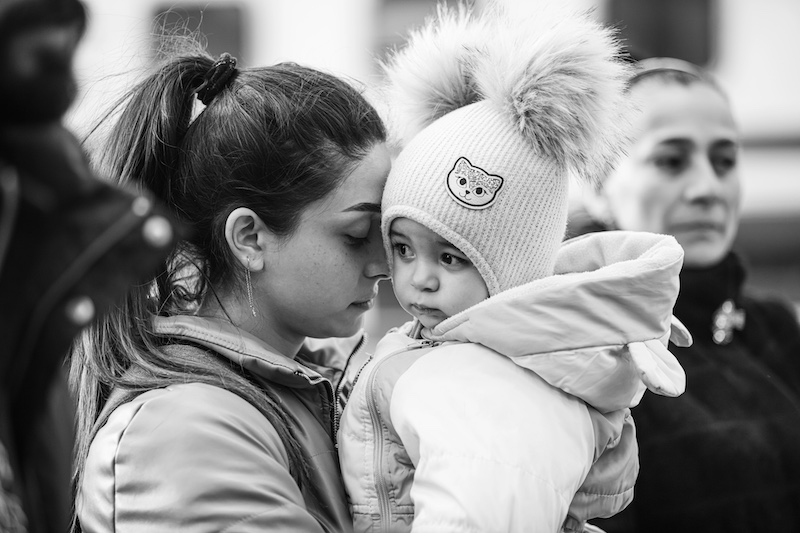
A generation of diaspora children is inheriting what might be called a digital inheritance: the steady transmission of livestreamed geopolitical trauma filtered through their caregivers’ nervous systems. This pattern is not confined to Iranian families. Across diasporas, from Ukrainian to Palestinian to Armenian and beyond, children are growing up inside parallel emotional worlds shaped by conflict unfolding in real time on their parents’ screens.
When trauma becomes atmospheric
We often imagine trauma as something that requires direct exposure. Yet vicarious or secondary trauma, the psychological distress resulting from repeated exposure to the suffering of others, does not require physical proximity. In diaspora homes, trauma can become atmospheric. It is not confined to a single event. It is carried in tone, posture, pacing, and silence. Repeated exposure to footage of massacres in one’s country of origin activates the same neural alarm systems involved in direct threat. A parent may watch a video of protesters being fired upon and feel their chest tighten, breathing become shallow, jaw clench. Hours later, while physically safe in Chicago or Boston, their body remains braced. The brain has encoded the visual threat. Sleep that night may be lighter. Concentration the next day more fragmented and emotional bandwidth thinner.


When a parent’s nervous system becomes caught in a survival loop, operating as though the danger in Tehran is unfolding in the same physical space, the child’s brain encodes the activation. Heart rate increases. Irritability rises. Baseline vigilance shifts upward. If this pattern repeats often enough, elevated arousal can begin to feel normal rather than episodic.
Atmospheric trauma rarely announces itself dramatically. It accumulates quietly through repetition, until heightened vigilance begins to feel ordinary. It is grief without a funeral, attachment without certainty. This is how a digital inheritance takes shape: not through a single event, but through repeated moments of unprocessed activation. What is often left unspoken is that transmission does not require visible violence. Attachment is the carrier.
Consider a scene where a mother may be laughing with her child when her phone rings. She answers. Within minutes, her voice lowers. Her shoulders tense. When she ends the call, the room feels different. The child does not know what was said. They only register that joy turned into gravity without explanation. The nervous system shift becomes part of the child’s internal map of safety.
When repeated over months or years, these episodes of acute activation do not remain isolated incidents. They begin to shape relational patterns within the family system. An example of this can be seen in the mother on the phone call who turns to her child and says, “Come talk to your aunt. She loves you.” She presses the phone gently toward the child’s ear. The child pulls away, irritated, and runs out of the room. Later, the mother may tell the child they were rude. “Your aunt just wants to hear your voice. It makes her happy.” What the mother does not see in that moment is the child’s internal conflict. Hearing the aunt’s voice does not feel simple. It may evoke ambiguous loss, the ache of loving someone who exists vividly but cannot be reached. It may activate grief without resolution, attachment without proximity. The child may sense, without language for it, that becoming more emotionally connected makes the distance and uncertainty harder to bear. Withdrawal becomes a protective maneuver.


But the transmission extends further. The aunt is not simply far away. She is far away in a country that feels unstable and unsafe. The child absorbs not only the separation, but the uncertainty surrounding it. They are not just missing a relative. They are missing a relative whose future feels unpredictable. That instability becomes folded into the attachment bond itself.
In this way, trauma of homeland loss is transmitted not only through stories of revolution or repression, but through everyday relational exchanges. The child begins to associate connection to homeland with vulnerability. Over time, love and danger can become psychologically intertwined. What appears outwardly as rudeness may, in fact, be an early expression of inherited grief.
The multigenerational transmission process
Murray Bowen’s Family Systems Theory offers a framework for understanding how this accumulation moves across generations. The multigenerational transmission process describes how levels of differentiation and patterns of anxiety are passed through ongoing relationships. Differentiation refers to the capacity to remain emotionally connected without becoming fused with the anxiety of the system.

Consider a family in which a grandfather fled Iran during the revolution and spent years listening to shortwave radio reports during the Iran–Iraq war. He learned to live in a state of anticipatory vigilance. His son, now a parent in the United States, grew up observing that vigilance and internalized it as normal. Decades later, that son watches livestreamed crackdowns on his phone late at night, heart racing, unable to disengage. His own child does not know the history of 1979 or 1988, but learns that when news from Iran appears, the household tightens.
No one explicitly teaches the child to be anxious about Iran. The transmission occurs through repeated emotional exposure. In the digital age, that exposure is no longer episodic. What begins quietly within one household can, over time, shape a generation. In families with lower differentiation, one person’s alarm quickly becomes everyone’s alarm. Emotional boundaries blur. Children may attempt to soothe a distressed parent or withdraw to avoid overwhelm. Over time, these patterns create meaningful differences in functioning among siblings and across extended family members. Higher differentiation does not mean indifference. It means the ability to care deeply about events in Iran while preventing that anxiety from saturating the household. Without differentiation, repeated geopolitical activation becomes embedded not only in memory but in relational style.
It is also important to recognize that the anxiety entering these family systems is not purely historical. Authoritarian regimes often operate beyond their borders through surveillance, digital intimidation, and the targeting of diaspora networks. Even when families are physically safe, the perception that the state’s reach is transnational sustains vigilance. In this way, fear is not transmitted only within families. It is reinforced by macro-level systems that extend across geography.
Why development matters
The distinction between adult and child exposure is developmental, not simply informational. An adult watching distressing footage may experience anxiety, anger, or despair. However, adults generally possess a fully developed prefrontal cortex capable of contextualizing risk, inhibiting impulsive responses, and integrating complex narratives. They have consolidated identities and broader life experience through which to interpret events. Children do not.
A preschool child processes primarily through sensory and relational cues. They are acutely attuned to caregivers’ physiological states. Sudden shifts in tone or tension can produce anxiety without cognitive understanding. At this stage, explanations should be simple, concrete, and reassuring. A parent might say, “Something sad is happening far away. It made me feel upset for a minute. We are safe here.” If a young child asks, “Are we going to get hurt?” the most regulating response is clear and brief: “No. You are safe. Grown-ups are taking care of things.”
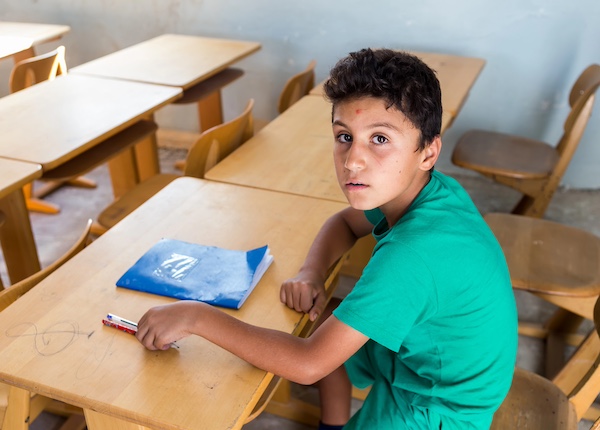
A school-age child begins to grasp fairness, injustice, and cause and effect, but still lacks full abstract reasoning. They may overhear fragments of news and attempt to assemble meaning independently. Without containment, imagination fills the gaps. With this age group, parents can offer slightly more context while maintaining boundaries. For example: “Some people in Iran are protesting because they want more freedom. The government has responded harshly. That makes many families worried. It is far from us, and we are safe here.” If the child asks, “Could that happen here?” an appropriate response might be: “Every country has different systems. There are problems everywhere, but there are also laws and protections. If something changes, adults work hard to keep children safe.”
An adolescent can intellectually understand political repression and historical complexity. However, adolescence is also the period of identity consolidation. Discussions should invite dialogue rather than deliver conclusions. A parent might say, “You may be seeing things online about what is happening in Iran. What have you heard? How are you thinking about it?” If the adolescent expresses fear or anger, the response can acknowledge both reality and regulation: “It makes sense to feel upset. I feel that way too sometimes. I also make sure to take breaks so I don’t stay overwhelmed.”
In each developmental stage, the goal is not to eliminate awareness. It is to modulate exposure and model regulation. Children are not simply processing geopolitical information. They are integrating their caregiver’s physiological response to it. The words matter. The tone often matters more.
Identity formation and perpetual precariousness
Identity formation unfolds within this emotional context. An adult watching events in Iran already possesses a consolidated sense of self. A child does not. They are constructing their understanding of who they are and where they belong. If the dominant emotional association with their heritage is instability, repression, and urgency, that association can shape identity development in subtle but enduring ways. Belonging may come to feel provisional. Safety may feel conditional. The future can feel negotiable rather than assumed. Over time, the digital inheritance becomes woven into identity itself, shaping how children understand safety, belonging, and possibility.
Many children also develop emotional code switching.
Clinically, this can manifest in different directions. Some adolescents may become intensely justice-oriented, organizing their emerging identity around activism and vigilance. Others may distance themselves from their heritage in an attempt to reduce emotional load. Both responses reflect adaptation to chronic instability rather than free exploration. Many children also develop emotional code switching. In school, they appear regulated and engaged. At home, they track global developments closely and sense the tension in the room. This constant adjustment between contexts requires cognitive and emotional energy. Over time, it can reinforce a quiet expectation that stability is temporary and threat is always possible.
In classrooms, this transmission is often invisible. A teacher may see distraction, irritability, or unusual intensity around global events without recognizing the layered geopolitical context behind it. In communities with large diaspora populations, understanding how livestreamed conflict enters family systems is increasingly relevant to educational practice.
Perpetual precariousness rarely appears as dramatic fear. More often, it appears as vigilance, future orientation, and difficulty fully inhabiting safety. It is equally important to note that diaspora families transmit resilience, resourcefulness, humor, and fierce relational loyalty alongside anxiety. Children do not inherit only alarm. They also inherit adaptability and deep relational bonds forged under pressure.
Epigenetics and the biology of chronic stress

Talking with children without transmitting trauma
Avoiding discussion of geopolitical events does not prevent transmission. Silence can heighten uncertainty. What matters is modulation. For younger children, simple and contained explanations are appropriate: something serious is happening far away; adults are working on it; you are safe here. For school-age children, brief contextualization with reassurance supports regulation. For adolescents, open dialogue that allows complexity without catastrophic framing is essential. Across ages, the most protective factor is caregiver regulation. When parents can acknowledge distress while remaining grounded, they model differentiation. They demonstrate that one can witness suffering without collapsing into chronic alarm.
Breaking the cycle of multigenerational transmission does not mean disengaging from Iran. For the diaspora, witnessing is often experienced as moral responsibility and love. The task is not to look away. It is to prevent inherited vigilance from becoming developmental baseline. Increasing differentiation within the family system reduces anxiety contagion. Limiting exposure to graphic material in shared spaces, creating predictable routines, and processing intense material with other adults rather than children all function as buffers. We are living in an era in which geopolitical crises are immersive and immediate. Children today are growing up with livestreamed repression and war as background noise. The clinical implications are only beginning to be understood. Children will inherit history. They will inherit culture, resilience, language, and pride. Whether they also inherit chronic physiological alarm depends in part on how consciously we regulate the emotional field of the home.


Bahareh Sahebi, PsyD, LMFT, is a clinical psychologist and licensed marriage and family therapist in the metropolitan Chicago area. Her clinical work is grounded in Integrative Systemic Therapy, with a focus on the clinical presentation of trauma, differentiation, and multigenerational transmission processes. An AAMFT Professional member holding the Clinical Fellow designation, Dr. Sahebi’s recent scholarship explores the intersection of collective trauma, neurobiology, and family process, particularly how sustained nervous system activation reverberates through attachment bonds, couple dynamics, and parent-child relationships. She gives particular attention to covert macro-systemic and socio-political pressures, including the persistence of authoritarian relational patterns and their impact on attachment, differentiation, and family functioning. An AAMFT Approved Supervisor and consultant, and recipient of the 2022 Northwestern University Teaching Excellence Award, Dr. Sahebi trains therapists in Integrative Systemic Therapy (IST), emphasizing differentiation, relational resilience, and the integration of macro-systemic context into clinical treatment. She is co-author of Integrative Systemic Therapy in Practice, a clinician’s handbook.
Other articles


High-Conflict Communication in Blended Families: Helping Everyone Feel Heard Without Escalating Conflict
After a divorce or separation, clients can feel as though everything is a fight. It isn’t that they are high-conflict people. More often, they have developed a pattern of communication in which conflict is expected before the conversation even begins. Now add the complexities of a second relationship and additional children, and the dynamics of any household can become truly complicated.
Amanda D. Singer, JD

Systemic Training in an Era of Anti-DEI Policies: Utilizing Three Systemic Pillars to Guide CFT Program Governance
Recent actions have affected DEI practices in higher education, with the February 14, 2025, Dear Colleague Letter (U.S. Department of Education, 2025) increasing scrutiny and causing uncertainty for programs focused on inclusion. Some departments face program threats, while others and institutions experience system-wide anxiety.
Mary R. Nedela, PhD, M. Evan Thomas, PhD, Deneisha Scott-Poe, PhD, & Sarah Powers, EdD

Optimizing MFT Professional Socialization Development: Using the 4C Assessment Model in Supervision
Supervision is a crucial aspect of the development of competent, ethical marriage and family therapy (MFT) professionals providing quality client care in practice.
Tia Crooms, PhD