
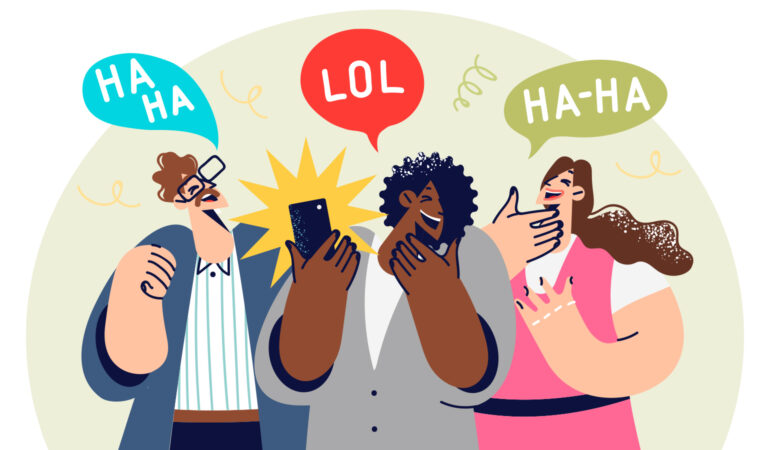
Every day, despite what life demands from us as educators, friends, daughters, and partners, both of us find ways to exchange little clips, memes, and funny stories via social media. These are meaningful digital breadcrumbs that keep us connected throughout the day as we experience life in both personal and professional roles. Whether it is an Instagram meme that perfectly captures our shared sense of humor or a Tik Tok that reflects our current mood, these bids for connection are our way of saying: I’m thinking of you.
 In many ways, this is our newfound practice that keeps us connected when life pulls us in different directions. It’s not surprising that this practice has earned a name: Pebbling, a term inspired by the courtship ritual of Gentoo penguins, who present pebbles to their mates as symbols of care and intention. When transferred to human relationships, this practice involves small, thoughtful gestures that present evidence when someone is on our minds. In the modern digital age, pebbling often translates to sharing memes, videos, or articles that resonate with people in our inner circles. For psychologists and sociologists, these digital bids for connection could be considered a modern love language that offers a simple and yet socially significant ritual that offers intimacy through micro-gestures that serve as a bridge to emotional distance and physical distance (Brody & Cullen, 2023; Grant, 2024).
Although technology has been vilified for its role in distancing people from genuine human interaction, it is equally important to recognize moments when technology can serve as a regenerative force, restoring connection, solidarity, and shared meaning in significant ways. Critics argue that screens have replaced face-to-face conversations and that social media often fosters superficial connections (Carr, 2010; Turkle, 2011). While there could be truth to these concerns, it’s also important to expand on how technology can enhance our relationships. For systemic practitioners who are interested in less linear ways of knowing, these bids for digital connection can remind us that relationships are not always defined by proximity or responsiveness.
When this practice is integrated in the daily lives of those who seek to sustain connection, pebbling can become a living illustration of recursive care: where small gestures are generative of meaning and movement that supports relational aliveness. Consider this: when a quick message or piece of content arrives in your inbox from a meaningful other, how do you experience yourself? Could these bids for connection help MFT practitioners to include the relationality of the digital world in therapy sessions?

For psychologists like Adam Grant and for us, the answer is YES. Grant (2024) describes pebbling as an act of care, noting that every pebble is a bid for re-connection. These small gestures are not trivial or out of the blue; they signal that we’re thinking of someone and want to share a moment of joy or relationality with them. For many, especially those who find traditional forms of communication challenging, pebbling can be a strong alternative for expressing affection and maintaining closeness without the pressure of sustained conversation. For people with neurodiverse abilities, pebbling can be an especially valuable form of communication. Traditional expressions of affection may feel overwhelming or inauthentic, but pebbling can allow for relational development through digital actions.
If therapy is the art of noticing how people reach for one another, then perhaps our task is to notice these modern practices even further.
Researchers who focused on neurodiversity and communication highlight that people who received neurodiverse diagnosis (e.g., ADHD, autism spectrum, etc.) often prefer concrete, interest-based, or asynchronous modes of social exchange, which can reduce social pressures and enhance relational connection (Dekker, 2020; Milton, 2012). For MFT practitioners, these distinctions can reveal the many textures of relationships and widen our understanding of what counts as connection.

In the fast-paced world we live in, it’s easy to overlook the importance of these digital bids for connection. Yet, if we take an interest in how people are creating new forms of relationships, we may be able to expand our therapeutic imagination in hopes of seeing technology not only as a threat to intimacy, but as another space where relational life unfolds. Ultimately, screen time should not only be considered as the enemy of connection. If therapy is the art of noticing how people reach for one another, then perhaps our task is to notice these modern practices even further. What if we were concerned in understanding how people sustain closeness through the practices that are available to them? What if connection is not disappearing in the digital era, but simply adapting? If that is the case, then our work is to keep searching and learning from how people are improvising as relationships keep evolving.

Danna Abraham, PhD, LMFT, works as an assistant professor at the California School of Professional Psychology at Alliant International University. She is an AAMFT Professional member holding the Approved Supervisor and Clinical Fellow designations. In her work, she focuses on community-based research and feminist approaches to critical engagement, with a particular focus on language and lived experiences. She is the director of the Research Initiative for Storytelling Engagement (RISE) Lab, where she explores the power of storytelling as a method for challenging dominant narratives for generative community-informed knowledge. www.theriselab.com / dayanne.abraham@alliant.edu

Afarin Rajaei, PhD, LMFT, is an AAMFT professional member holding the Approved Supervisor and Clinical Fellow designations, and associate professor at San Diego State University. She is also an associate editor of International Journal of Systemic Therapy. In her work, she focuses on diversity, inclusion work, AI in mental health fields, healthcare systems, couples with chronic illness, and romantic relationships. arajaei@sdsu.edu
Brody, N., & Cullen, S. (2023). Meme sharing in relationships: The role of humor styles and functions. First Monday, 28(5). https://doi.org/10.5210/fm.v28i5.12789
Carr, N. (2010). The shallows: What the Internet is doing to our brains. New York: W. W. Norton.
Dekker, M. (2020). Autistic community and the neurodiversity movement: Stories from the frontline. Palgrave Macmillan.
Grant, A. (2024, June 24). Sending memes, links, and videos to others isn’t trivial. It signals that you’re thinking of them and want them to share your joy. It’s known as pebbling, based on penguins gifting pebbles to potential partners. Pebbling is an act of care. Every pebble is a bid for connection. [Tweet]. X. https://x.com/AdamMGrant/status/1803095777373233200
Milton, D. E. M. (2012). On the ontological status of autism: The ‘double empathy problem’. Disability & Society, 27(6), 883-887. https://doi.org/10.1080/09687599.2012.710008
Turkle, S. (2011). Alone together: Why we expect more from technology and less from each other. New York, NY: Basic Books.
Other articles

Perspectives
“Over Advocacy”: Fighting for Trans Rights in the Face of Erasure
“They are trying to erase us.” This is the notion those of us in the queer community have felt since Donald Trump’s inauguration. Recently, the National Park Service website changed the page regarding the Stonewall uprising—a historic site where the LGBTQ+ community members came together to fight injustice in the 60s.
Gretchen Cooper, MA

Perspectives
Master’s in Marriage and Family Therapy: What Are We Fit For?
This question has been at the forefront of my mind as I began my job search during the final semester of my Master’s program in Marriage and Family Therapy, where I graduated with a CGPA of 3.97 from a COAMFTE-accredited program at a popular New York–based university. The program offered more than academic excellence—it fostered a sense of personal growth, connecting with our souls, guided by remarkable faculty and facilities, where I witnessed numerous transformations in the lives of many students.
Deblina Jha, MBA

Ethics + Legal
Ethical Considerations for MFTs in Combined Supervisory and Ownership Roles
The landscape of mental health practice, particularly within smaller clinical settings, often presents unique ethical challenges for marriage and family therapists (MFTs). Many MFTs find themselves wearing multiple hats—clinical supervisor, administrative supervisor, and owner/boss—especially in group practices or solo practitioner settings where the lines between roles can blur.
John Robbins, PhD, Shelby Riley, MS, & Megan Dolbin-MacNab, PhD