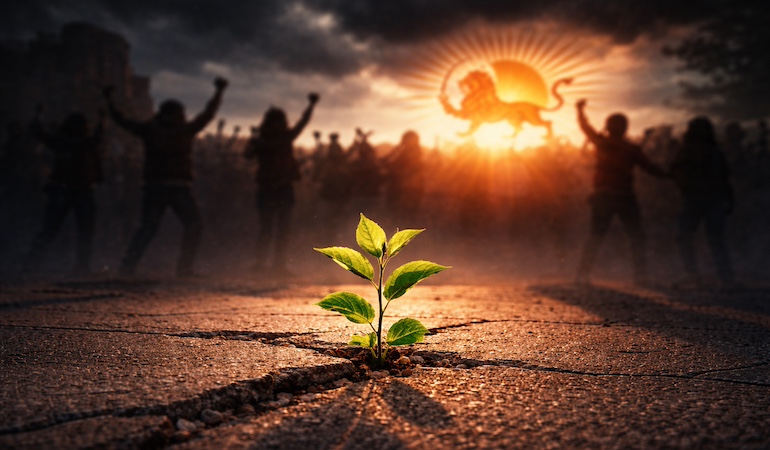
Historical Rupture and Long Conflict
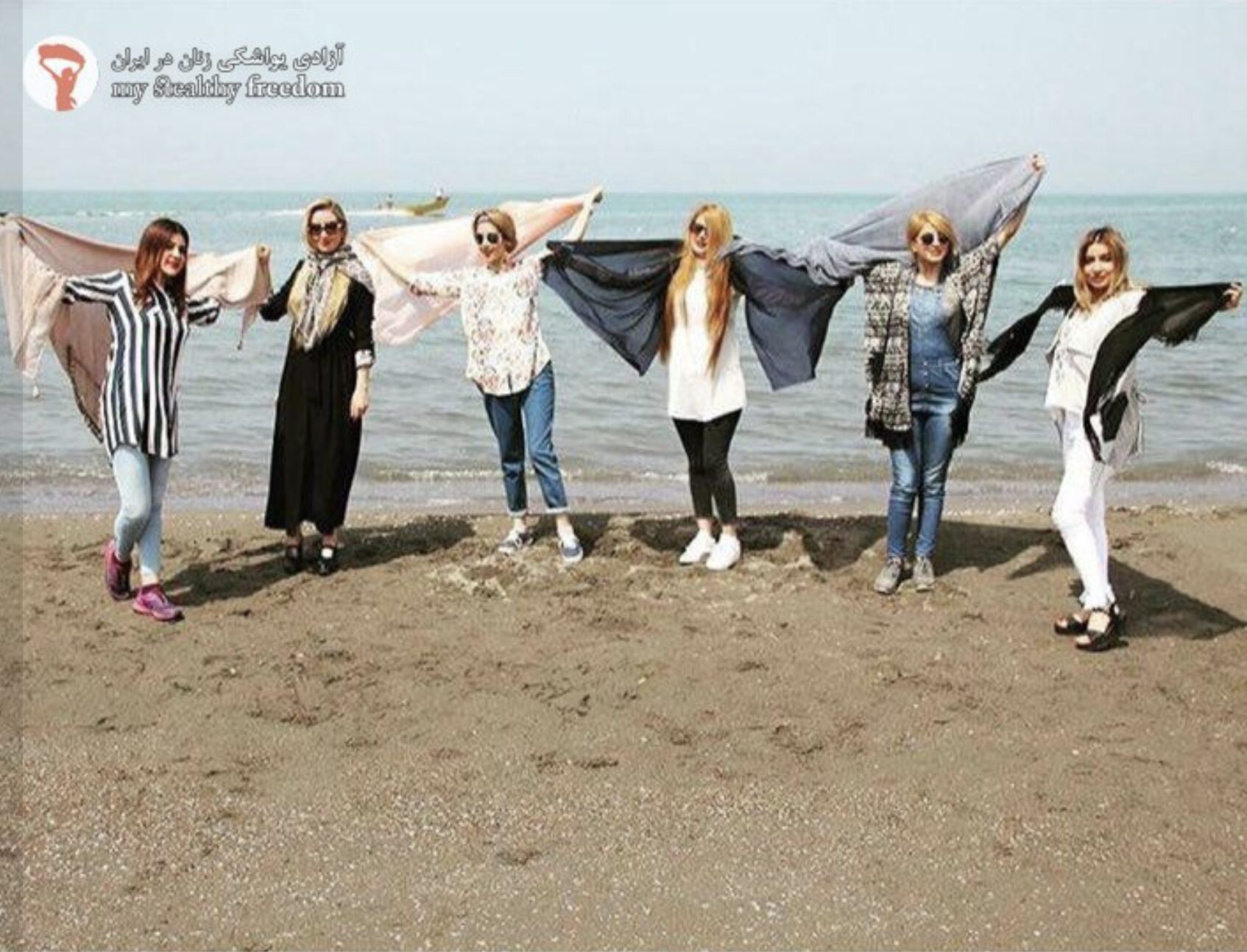
We are living through a historic inflection point, a moment that is reshaping how systems of power and resistance interact and how societies imagine their futures. Since 1979, Iranian society has been structured around an authoritarian system in which protest and suppression form a recurring relational pattern. External tensions with the United States and Israel have shaped policy, identity, and daily fear throughout that period. Today, that long-standing geopolitical conflict has shifted from indirect confrontation to direct military strikes inside Iran’s borders. For many Iranians, this does not feel like a sudden beginning but the escalation of a conflict that has been structuring life for decades.
When we organize our understanding around teams rather than structures, we risk overlooking the lived experiences of those inside the system itself.
There is another dynamic at work that extends beyond Iran. As humans, we are inclined toward narrative simplification. Under stress, we sort the world into good and bad, oppressor and oppressed, our side and their side. Polarization can temporarily steady us and offer a kind of clarity when things feel uncertain. In recent years, this binary orientation has intensified. We align ourselves with powerful states or with movements resisting power, often assuming moral coherence within whichever side we identify. From a systemic perspective, this is a form of emotional triangulation at a global scale. It allows us to stabilize our own uncertainty by locating virtue in one pole and corruption in the other. But systems are rarely that simple. Political structures that position themselves as defenders of the oppressed may simultaneously reproduce oppression internally. Power does not become ethical simply because it names an external enemy. When we organize our understanding around teams rather than structures, we risk overlooking the lived experiences of those inside the system itself.
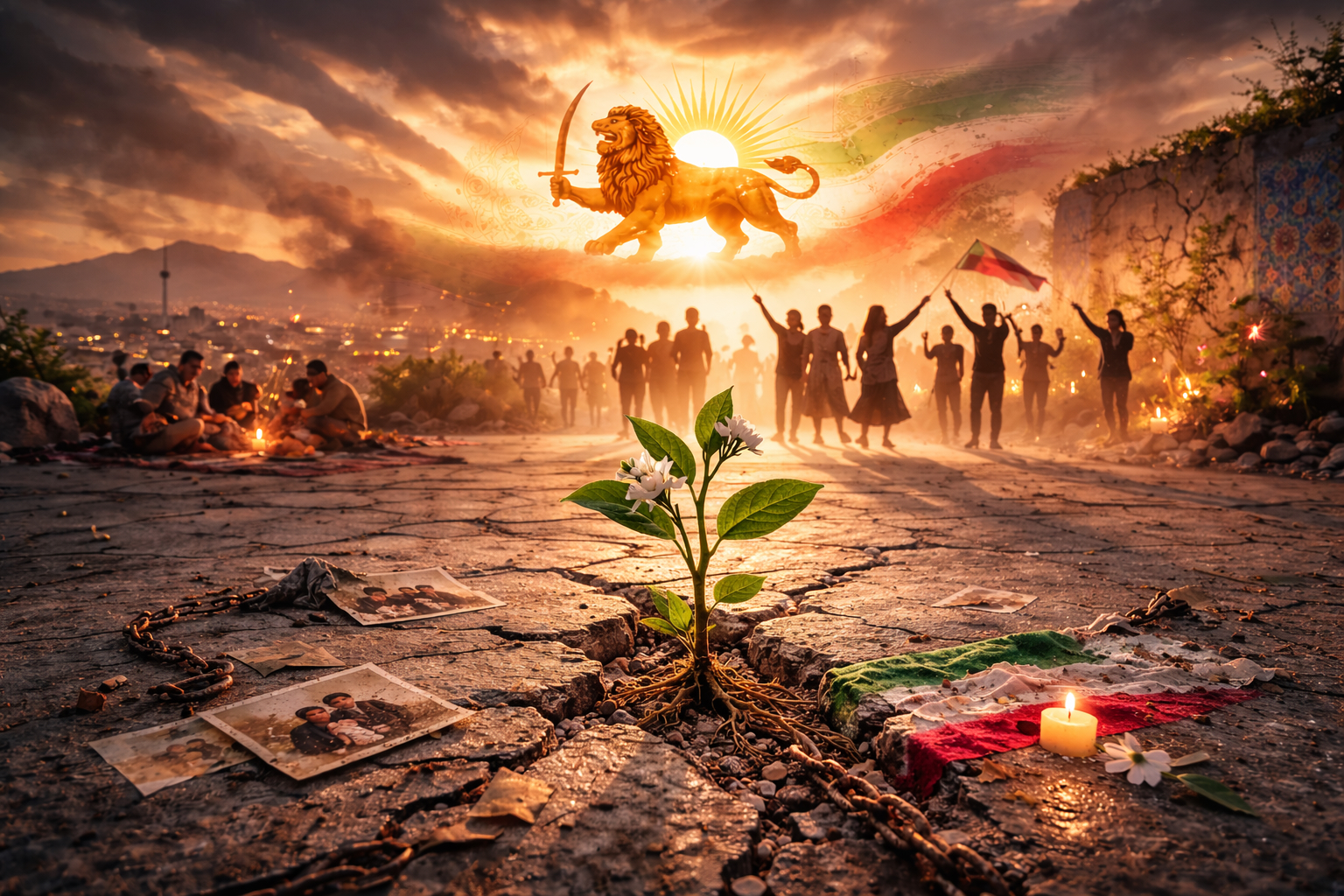
In the case of Iran, this means that global narratives about geopolitics can obscure the internal reality of Iranian citizens who have been negotiating repression for decades. When outside observers view the conflict only through the lens of international alliances, they may miss the complexity of how a state can frame itself as anti-oppression abroad while constricting agency at home. From a systemic lens, we try to resist moral splitting and hold multiple truths at once. Foreign intervention carries risk, and internal repression can be devastating. Power can present as protective in one arena and coercive in another. When we flatten complexity into sides, we lose sight of the people living within the structure. When global narratives organize around opposing camps, attention often follows allegiance. In polarized environments, suffering that complicates the preferred storyline can receive less visibility. From a systemic perspective, this is a predictable outcome of moral splitting. When we anchor ourselves to a side, we may unconsciously downplay information that disrupts that alignment. In the case of Iran, this has at times meant that documented abuses against Iranian citizens receive less sustained attention when they do not fit neatly into broader geopolitical narratives.
Exile and the transmission of longing
It is also important to understand that most Iranians did not leave because they wanted to build lives elsewhere. They left because staying became unsafe or impossible. Those who managed to migrate were often the fortunate ones with the means, the connections, or the narrow window of opportunity to escape. Nearly 10 million Iranians have rebuilt their lives outside the country since 1979, scattered across the world. Yet if you speak with them, many will tell you they have never felt entirely settled. There remains a quiet, persistent orientation toward return. A sense of being guests in their host countries, even decades later. This longing is not only individual. It is transmitted. Children and even grandchildren of Iranian immigrants often inherit both the love and the grief tied to a homeland they may know only through stories, food, music, and the ache in their parents’ voices. Attachment to Iran and the wound of exile become part of the family’s relational legacy and travel across generations.
Images that disturb and divide
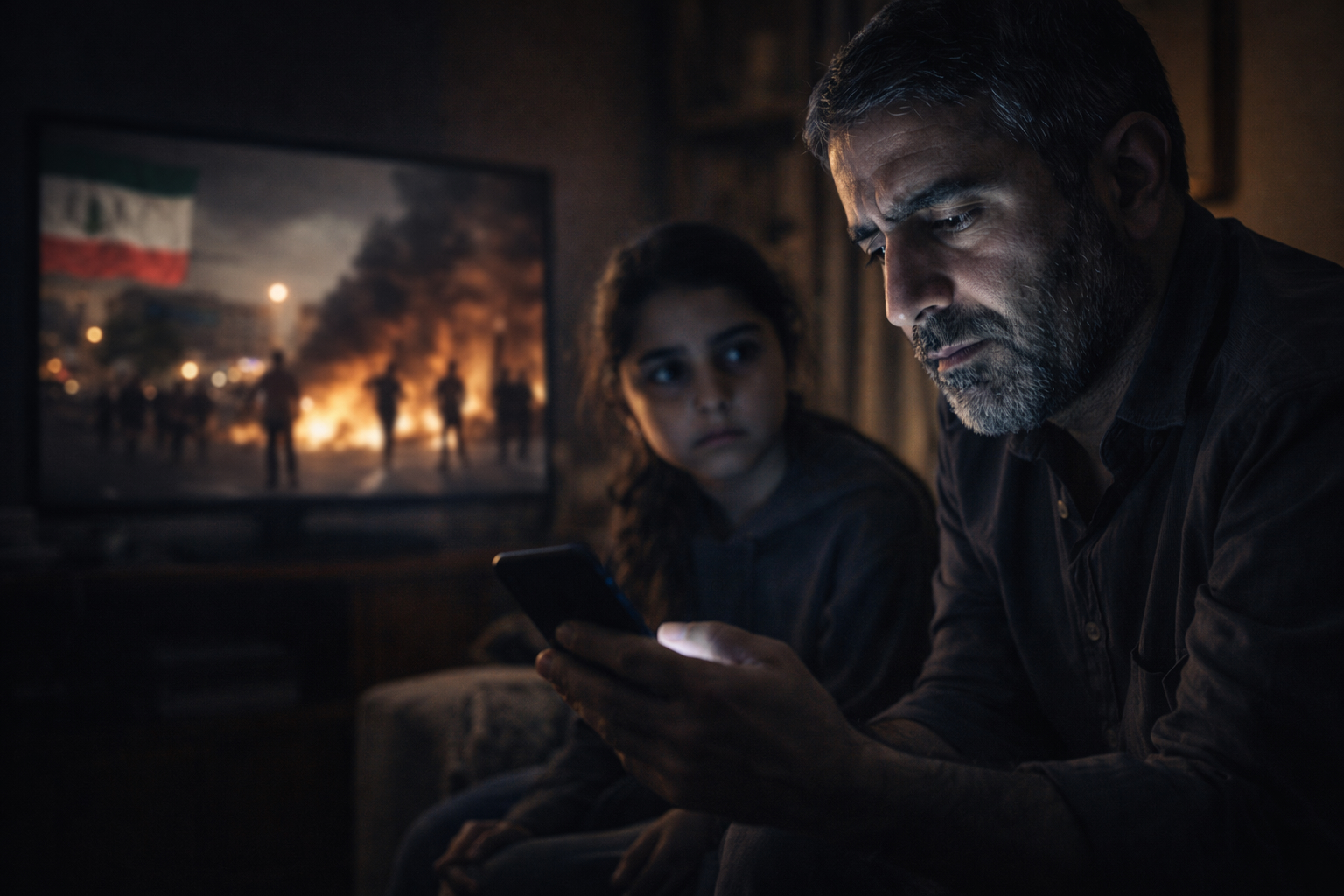
The videos coming out of Iran right now are disorienting if you are not Iranian. A flash in the night sky. Smoke rising near a government building. And then, in another clip, people clapping on rooftops. Car horns blaring in rhythm. Young men laughing in disbelief. Women crying and smiling at the same time. In some neighborhoods people spill into the streets dancing. In Los Angeles, Vancouver, Stockholm, families gather in living rooms, passing around sweets, refreshing Telegram channels, whispering, “Maybe this is it.” To an outsider, it can look grotesque. How can anyone celebrate their own country being bombed?