
Friedrich Nietzsche once said, “Family love is messy, clinging, and an annoying repetitive pattern, like bad wallpaper.”
My family has carried patterns as ugly as bad wallpaper, including intergenerational scripts of anger, estrangement, and survivalism that repeated themselves with paralyzing predictability. But like wallpaper, patterns can be stripped away and replaced with something new, something intentionally chosen rather than inherited, something more beautiful.
I am the mother of a perceptive, creative, wondrous seven-year-old daughter named Halle. She often asks me, “Mommy, how many kids did you want when you were little?” And in full honesty, I always answer the same way: “Baby, I never thought I’d be a mom. I didn’t want kids, but I’m so thankful I had you, and that I get to be your mommy. Do you want kids?” Without hesitation, she exclaims, “I want six kids!” In that moment, I feel a small shift inside me, a wondering if I am finally taking part in peeling away the wallpaper of generational wounding. It feels as though the story is being reauthored, moving from a once-harrowing tale frozen in unfinished business of the past, now commissioning new and original authors, toward a transformed narrative of care, redefinition, intentionality, and hope.
This reauthoring of my story feels both personal and archetypal. The patterns of rupture, absence, and longing, especially in my relationship with my mother, also capture the timeless dynamics of myth.
Reflections of my past and my generational inheritance
My childhood was marked by maternal anger and, often, emotional neglect. My mom was a single mother after divorcing my dad when I was young, enduring stressors I often felt vicariously. She yelled frequently, and I internalized the belief that something was inherently wrong with me. She partnered with men who were abusive (exposing us to physical, financial, sexual, and verbal violence) throughout my and my siblings’ formative years, exposure for which I had resented her well into adulthood. These moments shaped my early views of men, authority, and safety. They taught me the potential cost and threat of being fully myself and what was at stake if I were to embrace authenticity; I learned early that showing up as “the real me” was risky; that anger was explosive, and that unpredictability, bitter contempt, and chaos were normal parts of intimate connection.
As an adult, my views have since widened. I began to see my mother not only as the woman who hurt me, but as a human shaped by her own maternal and generational wounding, financial hardships, and trauma. A single mom of triplets, she relied heavily on her parents for childcare and financial support. I grew up in an emotional realm where conflict was explosive and connecting was synonymous with arguing. I watched my mom and my nonna scream and insult each other constantly, yet remain intensely fused. Only after my nonna’s death last year did my mother and I begin to repair something that had long been frozen in time.
For a long time, I wanted to be nothing like my mother. She was my blueprint for what I vehemently wanted not to become. But as I have grown, through motherhood, life experiences, and clinical encounters, I have recognized that my mom’s aggression held a raw vitality with enormous potential. She wielded her aggression without much skill but with unmistakable force. Despite the harm it caused, that vitality is something I have learned to integrate into my own psychological repertoire, not as explosive anger, but as fuel to create boundaries, have a voice, and claim my spark. I am learning to hold both the wounds she helped pass down and the strengths she never knew how to use well.
Stepping into motherhood and myth
Stepping into motherhood, I began to feel the residuals of my mother’s strengths and wounds intertwine within me, an invitation to claim what was vital, release what was harmful, and reweave the threads of our shared lineage. Becoming a mother demanded that I take responsibility for myself and for my child. It has been an invitation to fully claim my inner wisdom and the many parts of me. As a mom, I aim to give Halle the freedom to discover and be her truest self, while also prioritizing repair after conflict, within a relational atmosphere filled with love, enjoyment, attunement, and care strong enough to withstand life’s vicissitudes. Motherhood has given me the chance to break generational patterns of wounding and has introduced me to myself. As Lisa Marchiano writes in her book, Motherhood, “whatever is there to discover at the bottom of your soul, whether dross or treasure, motherhood will help you find it;” it was within my mother’s motherhood that I was most wounded, and it is within my own that I have been able to mend, reclaim, and transform those wounds.
In exploring my family’s deeper patterns, I am drawn to the myth of Demeter and Persephone, often used to illuminate the mother-daughter bond. The story mirrors my upbringing: rupture, longing, cycles of closeness and distance, and descent into the darker places of the psyche. Even in separation, a mother and daughter are bound by threads that descend into the underworld. In my relationship with my mother (and hers with her mother), these threads were thin, strained, nearly invisible, yet enduring. My mother’s inability to emotionally contain me reflected the archetypal winter of the myth, when Demeter withdraws her warmth. As Clarissa Pinkola Estés (1992) writes in Women Who Run With the Wolves, “When the mother cannot stay warm enough, the psyche grows fur in all the places left cold.” I now recognize how much of my psychological “fur,” which became my self-reliance, inwardness, and alertness to relational danger, grew from those cold places.
 Yet the myth does not end in winter. Persephone returns, initiated; her descent brings depth and wisdom inaccessible to untouched daughters. In many ways, I have lived a Persephone story: descending into the emotional underworld of my childhood, surviving what was not nurturing, and returning with clarity about the mother I refuse to be. This mythic lens helps me see that my mother did not fail to love me; she simply lacked the warmth and psychic capacity mothering requires. Viewing her through this frame has softened something in me, not by erasing harm, but by placing my story within the long lineage of women who have navigated similar wounds and resilience.
With this lens, the generational patterns revealed in my genogram take on new symbolic meaning as well.
Discovering the self: Patterns revealed in my genogram
My genogram reveals a web of systemic and intergenerational patterns that shaped who I became long before I had language for any of it. My relationship with my mom was marked by contempt; hers toward me and mine in response to her emotional absence. She made me feel fundamentally disliked by the person who was supposed to know me best.
Her romantic relationships reflected similar instability. She partnered with abusive men, forcing me inward from an early age to cope and to learn how to navigate frightening situations for which I had no other refuge or source of guidance to turn to. While some children grow up with attentive or overly involved parents who dictate every choice, I grew up without a safety net, without support or containment. This made me deeply self-sufficient and instinctively able to draw from my own inner wellspring. The downside is that I learned early that relying on others was dangerous, and this relational template still surfaces in adulthood.
I am prone to overfunction: being “the strong one,” sensing shifts in emotional temperature before anyone else.
Consequently, a major generational pattern I inherited is the impulse to take on more emotional responsibility than is mine, which is the result of a survival strategy passed down through the women in my family and forged from the need to self-protect in my early years, when my safety depended on reading the emotional cues of adults who lacked the skills to regulate or contain their own anger and strong emotions. As a result, I am prone to doing the emotional heavy lifting in relationships. I am prone to overfunction: being “the strong one,” sensing shifts in emotional temperature before anyone else. Often, I assume this role unconsciously; when I do, I both resent it and cling to it.
Another systemic pattern revealed in my genogram is relational cut-offs. Estrangement almost feels inherited. My mother remains estranged from my sister, and I have spent years at a distance from both parents. My sister and I are disconnected from our brother and our father (my dad is also cut off from his family of origin and his children’s families). Additionally, my mother has no connection with any of her family in Italy, leaving her with a very small family system, of mostly chosen family, as the only surviving member of her generation in America.
Estrangements permeate my genogram, in part, because conflict was never repaired; it fossilized. This shaped my expectations and fears: I both feared disconnection and anticipated it. It also contributed to my black-and-white thinking during conflict; withdrawal came to mean rejection and abandoning the relational bond, because that is what withdrawal meant in my family.
These patterns taught me that connection is tenuous, that love can evaporate, and that I must self-protect by relying on myself alone. And yet they also cultivated a strength: the ability to navigate internal landscapes, to trust my intuition, to survive what feels unsurvivable.
Alas, these relational patterns did not develop in a vacuum; they were shaped within broader cultural, spiritual, and socioeconomic contexts.
Cultural and contextual identity
My mom, along with my nonna and poppy, immigrated from Italy in the late 1960s, making me a second-generation American. Growing up in a family where the adults experienced dislocation gave me both an appreciation for cultures beyond my own and a sense of not fully belonging to mainstream American identity. My mom, shaped by her parents, was raised Roman Catholic and deeply devoted to saints and rituals, while my father is Jewish and included us in Jewish traditions before our relationship fractured following my parents’ divorce and ensuing court battles. My early childhood, therefore, carried a sense of spiritual multiplicity rather than dogma.
Over time, I shaped my own spiritual identity. I consider myself mystical, open, curious, and grounded in the transcendent more than in institutions. I love exploring Christian tradition, often reading the Bible, and attending a non-denominational Christian church. I also remain open to other faiths, having joined friends at synagogue services and interfaith celebrations.
Overall, I have cultivated a spirituality that resonates with me: one that emphasizes meaning-making, openness, and the ability to hold paradox and mystery; this capacity serves me both personally and professionally. It allows me to ground myself in a sense of belonging to something larger than myself, while also respecting the diverse ways others might make meaning in their own lives. As a therapist, I believe this orientation helps me create space for clients’ spiritual, cultural, and existential journeys without imposing my own frameworks. I can honor the complexity of their beliefs while also remaining curious and reverent for the unknown.
 Socioeconomic instability also formed the backdrop of my childhood. My mother relied heavily on my grandparents for financial and childcare support, and we lived in emotional and material precarity. Gender expectations shaped me, too; from a young age, I was expected to be mature, emotionally responsible, and perceptive beyond my years.
A strength I recognize in my family, reflected in my genogram, is the fluidity with which non-blood connections were treated as kin, meaningful and supportive, yet at times blurring family system boundaries, especially in light of the many relational cut-offs and disconnections. My maternal grandparents, perhaps shaped by a pervasive sense of displacement and longing for their homeland, welcomed everyone into their home, offering anyone a seat at the proverbial (kitchen) table. They treated my and my siblings’ friends and partners as family, expanding my understanding of belonging. This has influenced my adult relationships, including my co-parenting relationship with my daughter’s father, Christian. Though we consciously uncoupled after a long-term partnership years ago, we maintain loving ties with one another and each other’s families, reflecting a flexible, inclusive model of family that informs how I hope to meet clients in their own definitions of belonging. These cultural and familial dynamics shape not only who I am personally, but also how I show up clinically.
Barriers and strengths in the therapy room
My instinct to handle the emotional weight of relationships can lead to overfunctioning in the therapy room, rescuing, overidentifying, or working harder than the client. This instinct has surfaced in almost all of my close relationships, where I have remained feverishly devoted to uncovering emotional patterns. Yet this same attunement allows me to intuitively track emotional currents and shifts. I notice subtleties, can hold intensity, and create safety, qualities I once desperately needed and have learned to offer myself and others.
Another signature theme is my sensitivity to withdrawal. Reflected most obviously in my significant relationship with my ex, D’Vone, where our push-and-pull cycle of relating to each other triggered that old alarm, my primal fears. When he withdrew during conflict, I initially felt immediate panic, a panic that harkened back to the emotional abandonment of my childhood, and interpreted his distance as dislike, just as I once did with my mother. Over time, I began to shift the meaning I applied to the withdrawal. I came to understand his patterns, needs, and relational dance, using my sensitivity as a guide rather than a trigger. I learned that a meaningful relationship balances connection with personal responsibility and growth, honoring both intrapersonal development and the hope that the beloved other can actualize their greatest potential. This refined awareness allowed me to recognize when our relationship needed space and to honor it without personalizing it as a threat. It also gave me the strength to accept when the relationship needed to expire, when it became a place where we weren’t being uplifted or uplifting; we weren’t loving one another or ourselves well.
From a Bowenian perspective, my reaction to distance reflects what Bowen identifies as intense activation of the attachment system in individuals with lower levels of differentiation. When a person grows up in a family marked by high emotional reactivity, inconsistent caregiving, and unresolved attachment injuries, distance registers as threat, and the self becomes temporarily fused with the emotional field of the relationship. Bowen explains that individuals who come from multigenerational patterns of emotional cutoff, like my family, often develop a heightened sensitivity to emotional distance and an urgency to close the gap because cutoff historically signaled permanent rupture rather than temporary regulation (Nichols, 2024). In my family, a cutoff was the final stage of conflict, more stressful than yelling and intense affects because it meant the severing of a significant familial tie. From this multigenerational template, my urgency to close emotional gaps made sense.
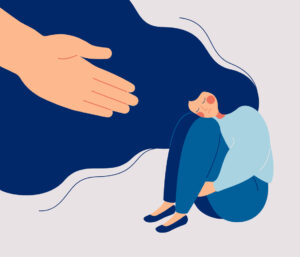 Conversely, D’Vone’s tendency to withdraw aligns with another Bowenian concept: pursuer-distancer dynamics, in which one partner instinctively moves toward connection under stress while the other instinctively moves away to regulate. Bowen emphasizes that these patterned cycles are not signs of pathology but of differing differentiation levels and anxiety-regulation strategies within the relationship system (Nichols, 2024). D’Vone often used distance as a way to regulate due to his unique temperament and relational history, not as a reflection of his feelings toward me.
As it relates to my historical fear of another person’s withdrawal, I have, from my relationship to D’Vone, learned to meet withdrawal, and the unease it stirs from within, with curiosity, tracing its taproots back to the ancestral threads of my family, to the frozen distances between familial ties, and to the relational ruptures that felt like abandonment. From a systems perspective, this is the work of increasing differentiation: learning to observe my emotional process without being overtaken by it, maintaining my sense of self even when someone I love takes space. In doing so, I can witness old wounds without being controlled by them and move toward a more fluid, compassionate way of relating.
In the therapy room, clients who withdraw or go quiet may activate an internal alarm. But now I can track it rather than merge with it; the sensitivity becomes attunement rather than a distorted assumption and overpersonalization. This awareness allows me to hold space for clients’ distance or silence with compassion, curiosity, and patience, fostering a therapeutic presence that supports both their process and my own capacity to stay grounded and responsive.
Lastly, my profound self-sufficiency is another mixed blessing and signature theme. Clients who rely heavily on external direction may feel foreign or frustrating to me. I may also minimize my own need for support in supervision. Yet this inward orientation gives me steadfastness, deep intuition, and a natural capacity to create reflective space for clients to discover their own knowing because that is how I survived. Again, reflecting that my personal qualities that can be the very patterns that may pose risks in the therapy room may actually hold the seeds of my clinical strengths when used with intention, discernment, and a lot of consciousness.
Reframing: Using signature themes as clinical tools
The survival strategies that once protected me can evolve into relational and clinical tools, instrumentalizing the Self in my practice. Instead of taking responsibility for a client’s emotional world, I can let my intuitive attunement guide pacing and presence while allowing clients to carry their own work. My sensitivity to withdrawal can help me name ruptures early and invite repair and enhanced understanding without collapsing into old wounds. My strong inner orientation can become a map for others on their way back to their own inner guides.
My ongoing growth will require constant self-reflection, supervision, and honesty about what still feels raw. I plan to remain in dialogue with my supervisor, continue journaling, and stay in personal therapy to understand the edges of my signature themes. I will need mentors who help me tolerate withdrawal without personalizing it and help me skillfully aim my empathetic capacity at the heart of the fuel that will foster my client’s growth. My story, its wounds, strengths, contradictions, and transformations, is the rich soil from which my clinical identity can flourish. By tending to it rather than escaping it, I can offer clients the containment, acceptance, and depth I once needed. All of these reflections, including my history, a mythic understanding, the genogram, and my clinical tendencies, converge in my developing therapeutic identity.
Conclusion
As I trace the threads of my family story, from the ruptures of my childhood to the strengths I forged in their wake, I see how deeply I have been shaped by the patterns I inherited and the patterns I refuse to pass on. The myth of Demeter and Persephone reminds me that descent and return are part of every human life. My descents have given me inner wisdom I now carry into motherhood and my profession, with the hope to help others in their own descents and accompany them toward whatever return is possible.
My genogram maps not just people but the emotional environment from which I emerged: overresponsibility, relational cut-off, self-sufficiency, vigilance around withdrawal, and a longing for safe connections. These patterns once felt like inevitabilities; now they feel like material for transformation. In becoming a mother, I offer Halle the steadiness I once craved. In becoming a therapist, I use my history with intention rather than unconscious reenactments. I know that the parts of me shaped in darkness can serve a purpose in the light; if I keep tending to these parts, I can accompany others through their own personal confrontations and transformations. With all that said, I am reminded that while the wallpaper of the past can be stripped away, the deeper work of tending to the foundation is lifelong, and it is this ongoing work that will allow me to meet others more fully in theirs.

Abigail Lamnin, RN, BSN, is an AAMFT Student member, a psychiatric nurse, and graduate student in Couples and Family Therapy based in Philadelphia. With over three years of experience in acute psychiatric and medical settings, Abigail works at the intersection of mental health, crisis intervention, and relational healing. Her clinical background includes inpatient psychosis care, crisis response, substance use stabilization, and medical-surgical nursing. Grounded in depth psychology, attachment theory, and systems thinking, Abigail is deeply drawn to the transformational power of relationships. She views therapy as a living, relational ecosystem, one that asks for curiosity, courage, and compassion in equal measure. Her work is particularly informed by her interest in couples and family systems, trauma, identity, and the alchemy that occurs when people are met with presence in their most vulnerable moments. Beyond her clinical roles, Abigail has contributed to nursing research, serves on interdisciplinary hospital workgroups addressing opioid-use disorder and systems-based care, and has volunteered crisis intervention efforts with the Crisis Text Line. Across all spaces, her work is guided by a devotion to emotional truth, relational repair, and the belief that healing happens not in isolation, but in connection.
Estés, C. P. (1992). Women who run with the wolves: Myths and stories of the wild woman archetype. Ballantine Books.
Marchiano, L. (2021). Motherhood: Facing and finding yourself. Sounds True.
Nichols, M. P. (2024). Family therapy: Concepts and methods (12th ed.). Pearson.
Other articles

Perspectives
Turning Down the Heat at Home: How Family Mediation Helps Resolve Conflict Before It Breaks Relationships
Adult siblings not speaking, parents and children at odds, tensions rising over decisions that feel impossible to agree on. Conversations turn into arguments. Small issues become symbolic of something bigger. Everyone feels misunderstood.
Amanda D. Singer, JD

Perspectives
Clinical Approaches to Psychotherapy: Distinctive Features, Common Ground
Because there is so much confusion about the multitude of modalities and differences among clinicians providing psychotherapy, the following will briefly describe some common approaches, rooted in psychoanalytic origins, with a focus on the unique contributions of the systemic perspective of marriage and family therapy training.
Maire Claire Daugharty, MD

Perspectives
Temperament: An Important Key to Understanding Oneself and One’s Relationships
Most people know the word temperament, but not really what it means. We’re born with nine different temperament traits, and they range from low activity to high activity. There is no bad trait; all of our qualities can be helpful or problematic depending on the circumstances and how we use them.
Trevor Huskey, MSSW