SYSTEMIC WORLD

Relief Under Fire: Chronic Repression and the Reorganization of Collective Survival


Historical Rupture and Long Conflict

We are living through a historic inflection point, a moment that is reshaping how systems of power and resistance interact and how societies imagine their futures. Since 1979, Iranian society has been structured around an authoritarian system in which protest and suppression form a recurring relational pattern. External tensions with the United States and Israel have shaped policy, identity, and daily fear throughout that period. Today, that long-standing geopolitical conflict has shifted from indirect confrontation to direct military strikes inside Iran’s borders. For many Iranians, this does not feel like a sudden beginning but the escalation of a conflict that has been structuring life for decades.

When we organize our understanding around teams rather than structures, we risk overlooking the lived experiences of those inside the system itself.
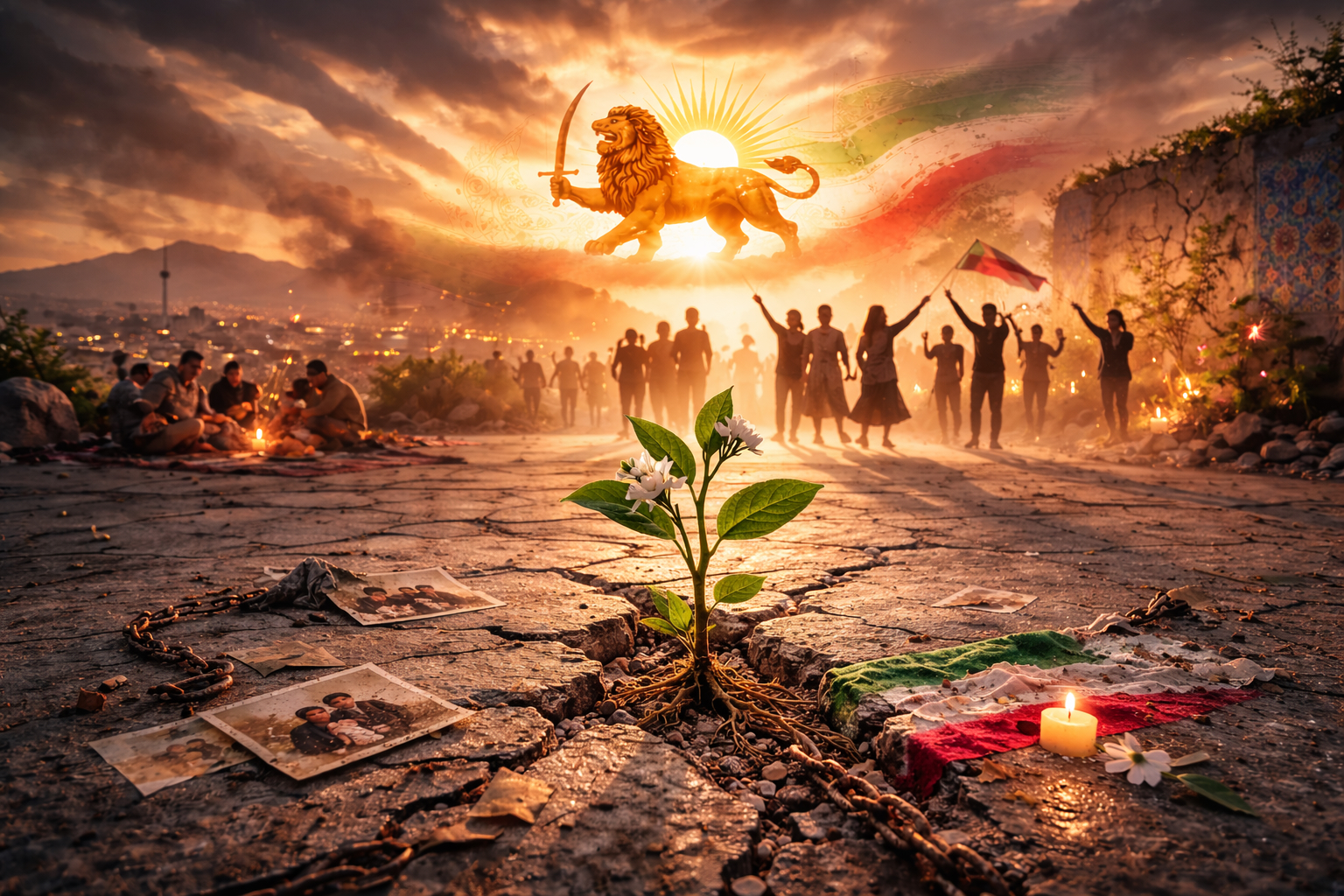
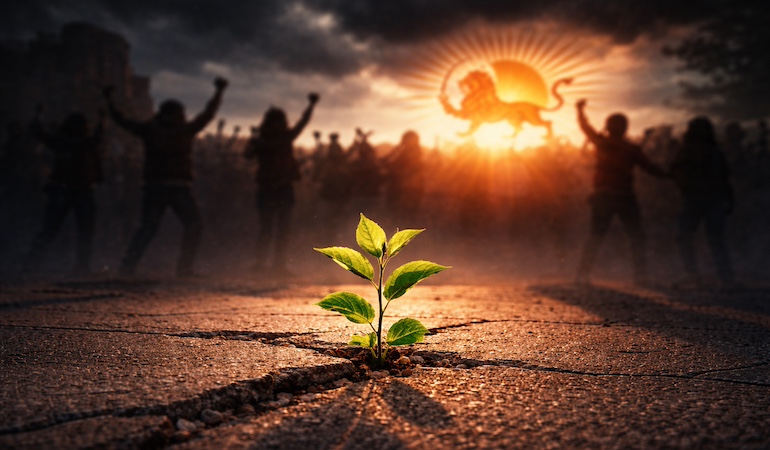
There is another dynamic at work that extends beyond Iran. As humans, we are inclined toward narrative simplification. Under stress, we sort the world into good and bad, oppressor and oppressed, our side and their side. Polarization can temporarily steady us and offer a kind of clarity when things feel uncertain. In recent years, this binary orientation has intensified. We align ourselves with powerful states or with movements resisting power, often assuming moral coherence within whichever side we identify. From a systemic perspective, this is a form of emotional triangulation at a global scale. It allows us to stabilize our own uncertainty by locating virtue in one pole and corruption in the other. But systems are rarely that simple. Political structures that position themselves as defenders of the oppressed may simultaneously reproduce oppression internally. Power does not become ethical simply because it names an external enemy. When we organize our understanding around teams rather than structures, we risk overlooking the lived experiences of those inside the system itself.

In the case of Iran, this means that global narratives about geopolitics can obscure the internal reality of Iranian citizens who have been negotiating repression for decades. When outside observers view the conflict only through the lens of international alliances, they may miss the complexity of how a state can frame itself as anti-oppression abroad while constricting agency at home. From a systemic lens, we try to resist moral splitting and hold multiple truths at once. Foreign intervention carries risk, and internal repression can be devastating. Power can present as protective in one arena and coercive in another. When we flatten complexity into sides, we lose sight of the people living within the structure. When global narratives organize around opposing camps, attention often follows allegiance. In polarized environments, suffering that complicates the preferred storyline can receive less visibility. From a systemic perspective, this is a predictable outcome of moral splitting. When we anchor ourselves to a side, we may unconsciously downplay information that disrupts that alignment. In the case of Iran, this has at times meant that documented abuses against Iranian citizens receive less sustained attention when they do not fit neatly into broader geopolitical narratives.

Exile and the transmission of longing

It is also important to understand that most Iranians did not leave because they wanted to build lives elsewhere. They left because staying became unsafe or impossible. Those who managed to migrate were often the fortunate ones with the means, the connections, or the narrow window of opportunity to escape. Nearly 10 million Iranians have rebuilt their lives outside the country since 1979, scattered across the world. Yet if you speak with them, many will tell you they have never felt entirely settled. There remains a quiet, persistent orientation toward return. A sense of being guests in their host countries, even decades later. This longing is not only individual. It is transmitted. Children and even grandchildren of Iranian immigrants often inherit both the love and the grief tied to a homeland they may know only through stories, food, music, and the ache in their parents’ voices. Attachment to Iran and the wound of exile become part of the family’s relational legacy and travel across generations.

Images that disturb and divide

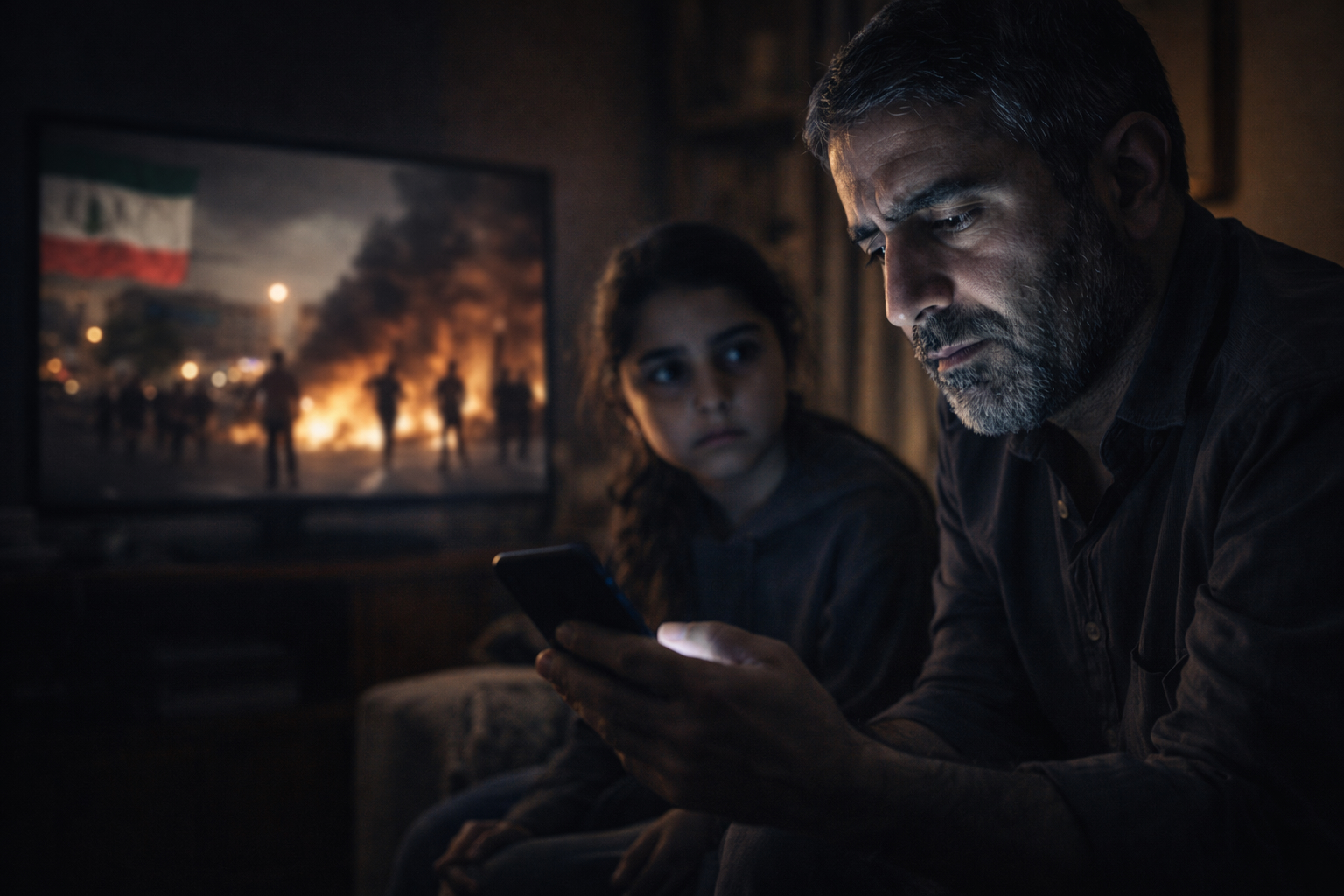
The videos coming out of Iran right now are disorienting if you are not Iranian. A flash in the night sky. Smoke rising near a government building. And then, in another clip, people clapping on rooftops. Car horns blaring in rhythm. Young men laughing in disbelief. Women crying and smiling at the same time. In some neighborhoods people spill into the streets dancing. In Los Angeles, Vancouver, Stockholm, families gather in living rooms, passing around sweets, refreshing Telegram channels, whispering, “Maybe this is it.” To an outsider, it can look grotesque. How can anyone celebrate their own country being bombed?


A society organized by fear

To understand this moment, you have to understand that for many Iranians, Iran and the Islamic Republic have not felt like the same thing for nearly half a century. Since 1979, daily life has been shaped by fear. Protesters shot in the streets. University students beaten and disappeared. Teenagers executed after rushed trials. Families forced to bury their children quietly after being billed for the bullets used in their execution. Morality patrols deciding how women dress, where they go, how they exist. Journalists imprisoned for reporting facts. Dissidents tortured for forced confessions. Internet blackouts and restrictions imposed when the state wants silence. State television controlling narratives. Satellite dishes confiscated. Surveillance woven into ordinary life.

Every few years, people rise. 1999. 2009. 2019. 2022. Each time there is a fragile surge of hope. Each time there is force. Arrests. Killings. Public executions meant as warnings. When a society lives inside that cycle for decades, patterns of fear and suppression become embedded in daily interaction, in family conversations, in the way children learn what is safe to say.

Negative feedback loop and survival logic

Repeated attempts at reform that are met with punishment create a stabilizing negative feedback loop that restores the status quo through fear. Agency becomes paired with danger. Expression becomes paired with loss. Over time, the regulatory field narrows. The system becomes organized around the expectation that nonconformity will be corrected through violence. First order change inside the existing structure is repeatedly neutralized.

Relief and terror coexist. Hope and dread sit in the same body.

In that context, something shifts in the organizing logic of the society. The question stops being “How do we grow?” The question becomes “How do we survive?” This is not ideological extremity. It is adaptive recalibration. In survival logic, minimizing exposure becomes primary. Parents teach children caution. Lowering your voice is an act of love. Silence becomes intelligence. Hope itself can feel destabilizing because previous surges of hope have been followed by collective loss. When that pattern holds for generations, incremental reform loses regulatory credibility. It is not that people prefer chaos. It is that lived experience has disconfirmed the safety of gradual change. So when regime compounds are struck, some Iranians are responding not to the bombs themselves, but to the perceived destabilization of a structure that has organized their lives for decades. Relief and terror coexist. Hope and dread sit in the same body. I have spoken with people inside Iran who say they are afraid their apartment building could be hit. In the next breath they say, “At least maybe the ones who ordered the executions are scared tonight.” That reaction is not bloodlust. It is accumulated rage after years of enforced powerlessness.

Moral injury and the destabilization of hierarchy

From a systemic perspective, chronic repression produces regulatory constriction. When internal efforts at change consistently result in lethal consequence, the system begins to encode protest as threat rather than pathway. Continuing to mobilize in ways that reliably produce death would fracture collective coherence. Reorganization around survival becomes necessary. This is where moral injury deepens. For decades, many Iranians have lived knowing atrocities were committed in their country’s name. Public executions. Children killed during demonstrations. To be symbolically represented by a state that harms your neighbors creates a rupture between personal identity and national representation. When that governing structure shows vulnerability, even briefly, the hierarchy feels less absolute. Figures long experienced as untouchable are suddenly perceived as vulnerable. Shame often follows relief. Both are understandable.

History shows this reaction is not unique. Under Nazi occupation, some French civilians cheered when Allied forces bombed infrastructure despite the risk to themselves. In parts of Eastern Europe under Soviet control, people quietly welcomed outside pressure against regimes that had crushed internal dissent for years. These moments were never simple. Civilian harm was real. Trauma was real. But when internal avenues of change have been exhausted, external disruption can begin to feel like the only lever left.

There is another layer that outsiders often miss. Many Iranians do not experience this as the beginning of war. They experience it as the continuation of one that has unfolded for decades in prisons, interrogation rooms, and city squares. When someone says, “War will hurt ordinary people,” the response from inside is often shaped by a different timeline. Ordinary people have already been hurt, repeatedly. This does not mean that civilian life does not matter. Many who cheer when a regime facility is hit will weep if a residential building is bombed. The distinction being drawn is between the machinery of repression and the lives of ordinary citizens. Whether war respects that distinction is uncertain. But emotionally, the line makes sense inside a history of suffocation.

Decades of daily defiance and micro-resistance

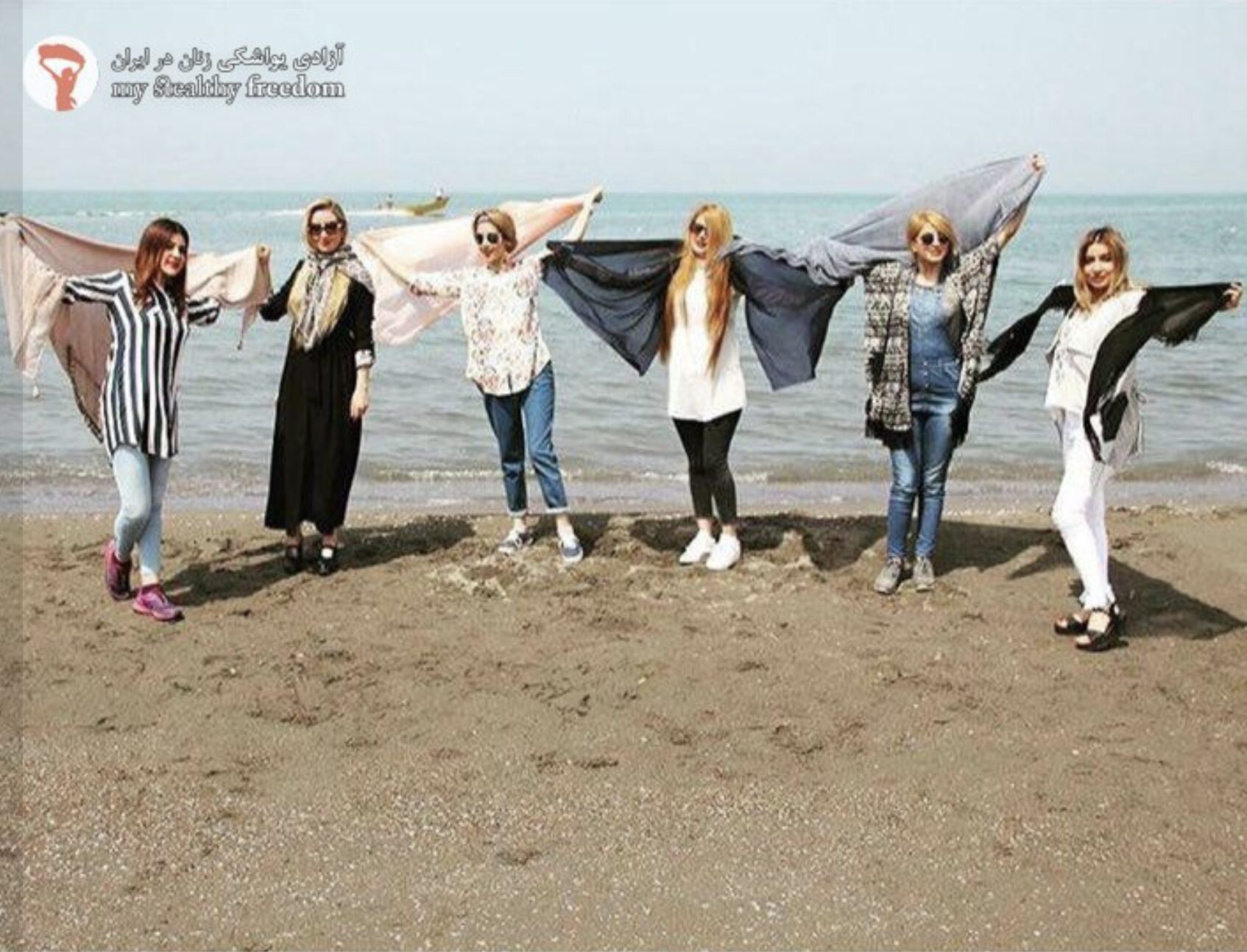
What is often missed in accounts of repression is how much daily effort has gone into resisting it. For nearly five decades, ordinary life in Iran has required constant negotiation. In the 1980s and 1990s, women were required not only to cover their hair but often their hands. Gloves were enforced in some public spaces. A strand of hair visible beneath a scarf could invite harassment, detention, or worse. Nail polish and makeup were treated as moral violations, sometimes punishable by arrest, public humiliation, or imprisonment. Bright colors were suspect. Music, gatherings, laughter in public spaces, even the way one walked could be scrutinized. Men were also regulated. In certain periods, wearing short-sleeve shirts in public could draw attention from morality patrols. Haircuts were monitored. Clothing choices were policed as signs of ideological deviation.

And yet people pushed. A little more hair visible each year. Scarves worn looser. Gloves quietly discarded. Nail polish returning, then eyeliner, then bold lipstick. Short sleeves appearing again in summer heat. Underground music scenes forming. Satellite dishes hidden and reinstalled. Social media accounts created under pseudonyms. These acts, though small, function as attempts at differentiation within a highly constricted regulatory environment. The population has not been passive. It has been engaged in continuous micro-resistance, expanding permissible space inch by inch. When those expansions were met with force, the cost could be jail, torture, disappearance, or public shaming. Living at that edge of negotiation for 47 years reorganizes the collective regulatory field in profound ways.

Reform without structural change

Over time, some restrictions loosened, but rarely as unilateral concessions. They shifted through sustained social pressure and repeated boundary testing. Music, once criminalized, slowly reentered public space. In the 1980s and much of the 1990s, having cassette tapes or CDs playing in your car could invite confrontation. Public joy itself could be interpreted as ideological deviation. Weddings were legally segregated. Men and women celebrating together risked being shut down. Women’s voices singing solo remain restricted in many contexts even today. Each incremental expansion of ordinary life occurred within a field of tension between state control and collective insistence.

The freedoms visible in Iran today, limited as they are, represent negotiated space within constraint. They emerged through countless micro-adjustments in behavior, dress, art, and social gatherings. Scarves worn looser. Music played anyway. Mixed celebrations held anyway. Satellite dishes removed and quietly reinstalled. These acts functioned as ongoing attempts at differentiation within a tightly regulated system. They were experiments at the edge of permissible variation. However, while the boundaries shifted, the governing architecture remained intact. The same institutional structures retained the authority to retract or punish deviation. This created a chronic instability in which expansion was possible but never secure. From a systemic perspective, this is the dynamic of constrained flexibility within an unchanged hierarchy. Small reforms altered surface behaviors while leaving the underlying power hierarchy intact. The Women, Life, Freedom movement in 2022 represented a qualitative shift in the regulatory field. The protests articulated not only opposition to specific laws but a demand for dignity, autonomy, and structural recalibration. When those demonstrations were met with lethal force, mass detention, and executions, the feedback pattern intensified. Hope did not disappear, but it reorganized. Risk tolerance expanded as more individuals concluded that compliance no longer guaranteed safety.

When incremental reform is consistently reversed or punished, the system begins orienting toward second order transformation as the only remaining variable capable of altering entrenched hierarchy.

January 2026 marked widespread killings during national demonstrations by the Islamic Republic. Some independent human rights organizations and leaked internal documents have estimated the death toll at over 30,000 within days, though these figures are difficult to independently verify due to severe information restrictions. More than 50,000 individuals were reportedly detained, and many more remain disappeared. Regardless of precise numbers, the scale of collective loss marked a profound rupture. In systemic terms, repeated investment in first order change followed by lethal correction weakens confidence in internal modification. When incremental reform is consistently reversed or punished, the system begins orienting toward second order transformation as the only remaining variable capable of altering entrenched hierarchy. This orientation does not emerge from a single event. It develops through accumulated disconfirmation across decades. When negotiated freedoms remain contingent and revocable, and when generational expectations diverge sharply from governing ideology, structural misalignment becomes increasingly visible.

Over time, the belief that only fundamental reorganization could resolve that misalignment becomes embedded in the society’s shared narrative. This shift did not occur suddenly. Across years of repeated reform efforts followed by reversal or repression, fewer segments of society remained willing to invest in change within the existing structure. The system’s perceived capacity for first order change weakened incrementally. January 2026 did not create that trajectory, but for many it marked a decisive consolidation of a perception that the governing system was fundamentally misaligned with their lived realities and future aspirations.

Diaspora, divided belonging, and the hope of return

For diaspora Iranians, the experience is layered with divided belonging. They live in physical safety while remaining emotionally embedded in a threatened system. Relief arises and is quickly followed by guilt, while hope expands and then contracts into shame. They celebrate a strike and then lie awake wondering who else may have been hurt. This is not inconsistency, but rather functioning inside one system while emotionally embedded in another. For many in the diaspora, the visible expressions of joy cannot be reduced to support for war. For decades, the Islamic Republic has been experienced not as a natural extension of the nation but as a coercive authority governing through force. In the internal relational map of many Iranians, the rupture did not begin with foreign strikes. It began in 1979. Since then, the state has functioned as an occupying structure within the homeland, regulating daily life through surveillance, punishment, and ideological control.

When external forces confront that structure, some in the diaspora do not register it first as invasion of their country. They register it as disruption of what has long felt like an internal occupation. The regulatory hierarchy that organized exile, separation, and longing appears less permanent. For those who left under constraint rather than choice, this moment can activate a dormant orientation toward return. Exile was rarely imagined as final. The regime was understood as temporary, a historical interruption. Decades later, that interruption has endured, and longing has been transmitted across generations. So when the regime shows vulnerability, relief can surface alongside fear. Beneath the visible celebration is something quieter and deeply systemic: the reactivation of the belief that home might become accessible again. This does not erase the risks of escalation or the reality of civilian harm. It does not romanticize destruction. It reflects how prolonged displacement organizes attachment. When the structure perceived as blocking return appears destabilized, the nervous system registers possibility. For many, the reaction is less about invasion and more about the loosening of a barrier that has stood between them and home for nearly half a century.

Clinical implications for systemic practitioners

For many Iranians, this moment is not about choosing sides. It is about surviving history. If you are not Iranian, you do not have to approve of the reaction. You may believe foreign intervention will deepen suffering. That concern is legitimate. But before dismissing rooftop dancing as cruelty, consider what 45 years of constricted agency does to a population’s nervous system. When a structure that has organized fear for decades shows vulnerability, even briefly, possibility registers. It is not joy at destruction. It is the sudden expansion of perceived agency after prolonged compression.

A systemic stance asks us to remain differentiated while staying empathic.

For clinicians and systemic colleagues, this moment calls for listening more than interpretation. Iranian clients may carry layered realities. Relief beside grief. Hope beside dread. Silence that once protected is now colliding with the need to speak. Rather than sorting reactions into right or wrong, we can ask what history makes them coherent. Many Iranian families have transmitted vigilance across generations. Lowered voices, coded language, and emotional restraint were adaptive. When clients struggle to articulate their reactions now, it may reflect inherited survival patterns rather than avoidance. We may also notice our own responses, including discomfort and political opinions, wanting to have a voice in the conversation. Anxiety about saying the wrong thing may lead us to avoid asking at all. A systemic stance asks us to remain differentiated while staying empathic. We do not need to share geopolitical views to validate that prolonged powerlessness reshapes perception.

For Iranian colleagues, this period may carry quiet strain. They may be holding fear for loved ones while continuing to show up professionally. Simple acts of checking in and making space for complexity matter. When a society has lived under chronic coercion, emotional responses to perceived disruption will not be neat or predictable. They will be contradictory. Our work is not to resolve the contradiction. It is to hold it.

In polarized times, empathy is not neutrality. It is disciplined presence. If we can create spaces where relief, dread, grief, anger, and hope can coexist without shame, we honor the complexity of a people living through a historic rupture. That is systemic work at its most human.

Also by this author: An Iranian Therapist’s Reflection: A Revolution has Begun, Inspired by Decades of Oppression, Led with Courage and Determination by the Women of Iran

Screenshot

Bahareh Sahebi, PsyD, LMFT, is a clinical psychologist and licensed marriage and family therapist in the metropolitan Chicago area. Her clinical work is grounded in Integrative Systemic Therapy, with a focus on the clinical presentation of trauma, differentiation, and multigenerational transmission processes. An AAMFT Professional member holding the Clinical Fellow and Approved Supervisor designations, Dr. Sahebi’s recent scholarship explores the intersection of collective trauma, neurobiology, and family process, particularly how sustained nervous system activation reverberates through attachment bonds, couple dynamics, and parent-child relationships. She gives particular attention to covert macro-systemic and socio-political pressures, including the persistence of authoritarian relational patterns and their impact on attachment, differentiation, and family functioning. A recipient of the 2022 Northwestern University Teaching Excellence Award, Dr. Sahebi trains therapists in Integrative Systemic Therapy (IST), emphasizing differentiation, relational resilience, and the integration of macro-systemic context into clinical treatment. She is co-author of Integrative Systemic Therapy in Practice, a clinician’s handbook.

Other articles

Gray Divorce: Splitting Up Later in Life
Perspectives

When Family Therapists Go Back Home to Their Families: Notes from an Autoethnographic Practice

Family therapists can spend a lifetime studying theories about family patterns, intergenerational communication, recursive loops, and the dance between closeness and separateness, to name a few. During our training, we are taught to map triangles, track emotional processes across decades, and listen for the stories that shape a person’s sense of personhood.
Danna Abraham, PhD

Meaning of Aging in a Time of Crisis
Perspectives

Friendship, Partnership, and Love Affair: Helping Couples Navigate the Differences so They Can Thrive Together

I see a committed relationship as having three aspects: friendship, business partnership, and love affair. Friendship is liking/respecting/enjoying a partnership, enjoying time and activities together, and, hopefully, having adventures. Business partnership is about logistics running a household (shopping, cleaning, cooking, managing money, cars, etc.), and parenting, whether that’s children and/or pets. A love affair is a deeper intimacy of sharing emotionally, physically, and sexually.
Trevor Huskey, MSSW

Gray Divorce: Splitting Up Later in Life
A Message From The President

The Role of MFTs in Uncertain Political Times: Two Families as an Example

No matter what side of the political spectrum you find yourself, I think all will agree that the past year has been a roller coaster ride in United States (US) politics. Politics have ranged from usual polarizations, arguments, and stuck positions, to abuse, killings, overt racism, and heightened policing, to name a few.
Adrian Blow, PhD