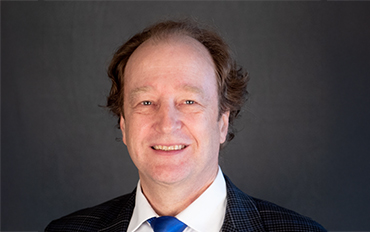
I (LLC) interviewed Alexandra “Xan” Weber, International Institute for New England’s (IINE) Senior Vice President for Advancement. IINE was founded in 1918, and is a non-profit social service organization that serves refugees and immigrants through resettlement, education, livelihood/career advancement and support for the journey toward citizenship. Responsible for resource development, advocacy, and strategic initiatives, Xan oversees the organization’s fundraising, institutional partnerships, advocacy initiatives, and strategic planning. She began her career at IINE in 2008 as IINE’s Director of Community Services, managing the Boston site’s refugee resettlement program, various victim services projects, and behavioral health services. IINE is an affiliate of the United States Committee for Refugees and Immigrants, and one of the nine national networks contracted with the U.S. Department of State to resettle Afghan evacuees. In 12 weeks, IINE resettled over 450 Afghan evacuees throughout New England.
Laurie: What are the most important things that clinicians need to know about this group?
Xan: In my presentations to the community, I often list everything that refugees usually go through—statelessness and forced migration, violence, war. This population faced an additional challenge—evacuation, an additional trauma. At IINE, we’re not used to receiving evacuated populations who have had no time to prepare and process their resettlement. Afghan evacuees did not prepare for resettlement and I think that that in itself has created another layer of suffering. We are meeting many Afghans who do not have a sense of refugee identity. Evacuees made a life or death decision to evacuate—a lot to process in just a short amount of time. And we’ve heard the actual evacuation itself was horrible and traumatic. People rushing the airports and tarmacs and getting trampled, getting pulled over barbed wire fencing to reach an airplane, some people making it onboard and others not and families separated.
Afghan evacuees were air evac’ed from Afghanistan to a third country, and this step added to the complexity of their resettlement process. From overseas bases, evacuees were flown to Dulles Airport in Virginia and then dispersed to military bases in the U.S. A shuffling between U.S. bases in multiple countries is not the typical refugee experience, and when they arrived at U.S. bases, most lacked processing documentation. Lack of documentation impacted evacuees’ sense of security—they did not enter the country with traditional refugee documentation, work authorization, etc. The U.S. government didn’t really know who they were and they had to go through months of processing on U.S. bases to generate critical documents. On the U.S. military bases, families struggled. Even if they had shelter, heat, and food that they could eat, for some there was so much dust in the air, their children had asthma attacks.
Laurie: Can you say a bit more about the term used for the evacuees? “Humanitarian parole”?
Xan: Most Afghan evacuees were offered Humanitarian Parole by the U.S., and they entered as parolees. Humanitarian Parole is a rare authorization—it’s an opportunity offered to people ineligible for admission to the U.S. to enter temporarily due to a compelling emergency. This designation is outside of refugee processing, and it doesn’t confer the same benefits. Afghans who have humanitarian parole have been authorized to stay in the U.S. for two years, and within that time, they have to adjust their legal status or they will become unlawfully present. Afghan evacuee status presents, therefore, an additional significant concern—without a broad status adjustment of the 100,000 Afghans who are here now, every single one of them will need an attorney to adjust their legal status in the U.S. The adjustment process is extraordinarily time consuming and expensive.
Laurie: How would you say your organization looks at mental health and psychosocial support needs of the families you serve, in particular the Afghan families?
Xan: I think it’s our mission to consider clients’ health, mental health, and well-being. The logistical support offered by resettlement is not enough. Refugees by definition have been through persecution, for many physical and emotional violence, and upon resettlement need time to adjust. Ideally, IINE would have clinically-trained case workers who could enhance client health, even providing practical and logistical support alone. We don’t have many clinically-trained case workers on staff, but we are lucky because we work with amazing community health center partners, and over the summer we moved offices in Lowell and are now co-located with the Lowell Community Health Center. In considering our move, we asked ourselves, what’s the most important support that our clients need that we don’t provide? We don’t provide healthcare [at IINE]. In combining skill sets with partners, we can achieve holistic support.
Laurie: What have you seen that’s on the minds of these families? What’s the thing that they’re telling you or telling your caseworkers?
Xan: I’ve worked with a few Afghan families myself, and our staff have shared lots of different stories about their experiences resettling Afghan evacuees. Honestly, I think our staff, on the whole, are very challenged by many of the Afghan families that they’ve met. The evacuees’ expectations are so high, and many seem so dissatisfied with what we can offer through the resettlement program. The U.S. resettlement program is one-size-fits all: every refugee receives the same services and support, right down to the the number of forks, spoons, and knives per family…it’s very, very proscribed.
At IINE, we’ve been doing this a long time—we try to assess each family’s needs and we give as much individualized support as we can. Because of an incredible outpouring of support from community members and funders, the Afghan evacuee population is receiving about five times the amount of funding and resources than any other resettling refugee population. But many evacuees are upset because they expect to resettle into a middle-class American life, and the U.S. refugee program doesn’t provide resources to begin life in the U.S. at that economic level. Most families we have met are completely focused on their children, and they are here for their children. They’re also really focused on working; they want to get a job. They want to know where their paperwork is. They want to know where the grocery store is. They want to know how to get work authorization. They want to know where things are, they want to do things. They want a bank account, they want to finally move into the driver’s seat in their life after having a huge, disruptive time of feeling out of control.
After the evacuation experience, it hard to know how so many function so well. Most are simultaneously experiencing deep grief, because most of their family is still in Afghanistan.
Laurie: Have you noticed things that have worked that have been helpful to reduce the worry for the families you work with, or that caseworkers work with?
Xan: I think when evacuees get their questions answered, that’s the most helpful, moving away from complete uncertainty about everything and toward control. Even if it’s just receiving a food card to go and buy their own groceries. These are practical things that I think have helped people start making their decisions, and feeling more in control.
Laurie: You mention the deep grief for families, who are separated from each other, with many still in Afghanistan. Can you say more about what is happening regarding reuniting families?
Xan: Most evacuees left most of their family in Afghanistan when they were evacuated. We refer evacuees to our attorneys to explore legal reunification options. But we haven’t had success in helping Afghan families in country to get out. An IINE case worker is an Afghan refugee whose family resettled in Canada, and she and her husband were admitted to the U.S. Her entire family fled Afghanistan through Pakistan, and just barely escaped. They recently joined her sister in Canada. The CTV W5 Channel broadcasting station did an entire video series on her—with graphic footage of the Afghan evacuation. Watching it, I realized it is hard to put into context what people endured. People had to decide who in their family was going to try to evacuate and who would be left behind.
But those who fled have not left their connections behind. Many Afghans are motivated to resettle and work because they want to be able to send money home, to those now struggling in an Afghanistan on the verge of famine. I was just talking to someone who worked in Afghanistan for years, and he said all of the money wire channels are still open, and people can still send money through Western Union to family in Afghanistan. At the end of the day, what you learn as a resettlement provider is that those offered a chance to resettle in a new country and rebuild their lives are not just here for themselves. They try desperately to share even the most basic, modest support they are given with others still in hell.