

April 2026
Sleep Problems Are Relationship Problems: Why MFTs Should Be Leading Dyadic Sleep Interventions
Marriage and family therapists (MFTs) know something that sleep medicine has taken decades to discover: human problems don't exist in isolation. When someone can't sleep, it's rarely just their problem. It's a couple problem. A family problem. A relationship problem. After decades of research on sleep and relationships, the evidence is overwhelming: sleep is fundamentally [...]
Read More
April 2026
When the World Becomes Too Much: Living in Oscillanguish
There are moments in history when the emotional life of individuals cannot be understood outside of the systems they are embedded in. Moments when distress is not simply internal, but relational, political, technological, and collective. During the COVID-19 pandemic, Adam Grant talked about the concept of languishing, describing a psychological state between depression and flourishing, marked by emptiness, [...]
Read More
January / February 2026
Autoimmune Neuropsychiatric Disorders in Children
This article provides an overview of Pediatric Acute-Onset Neuropsychiatric Syndrome (PANS) and Pediatric Autoimmune Neuropsychiatric Disorders Associated with Streptococcal Infections (PANDAS): A Beginner’s Guide for Mental Health Providers and Allied Professionals Pediatric Acute-Onset Neuropsychiatric Syndrome (PANS) is a clinical condition characterized by the sudden onset of severe neuropsychiatric symptoms in children, most notably obsessive-compulsive behaviors [...]
Read More
January / February 2026
When the Chart Is Watching Back: AI, Consent, and Control in Teletherapy Documentation
Picture this: you finish a teletherapy session, rich with layered family dynamics, unspoken tensions, and a breakthrough moment in relational co-construction, and open the electronic health record to chart. But the platform has already been at work. An AI-generated summary sits there, neatly formatted, highlighting symptoms, diagnoses, and suggested next steps. It asks for your [...]
Read More
January / February 2026
Beyond Remission: How Marriage and Family Therapists Support Oncology Survivorship
The completion of active cancer treatment is often associated with anticipated relief for most individuals and families. Appointments are spaced out, side effects subside, and crisis-related language is eased. However, for many survivors and their loved ones, this phase is characterized by less finality and more ambiguity. Although treatment may have ended, the psychological, relational, [...]
Read More
January / February 2026
Perimenopause and Early Trauma: A Systemic Approach for MFTs
Perimenopause, the transitional phase before menopause, brings hormonal shifts that manifest as hot flashes, mood swings, and sleep disturbances, impacting not just the individual but their entire family system (Santoro, 2016). Recent research reveals that early trauma, such as childhood abuse or adversity, intensifies perimenopause symptoms, creating unique challenges for families (Carson et al., 2022; [...]
Read More
November / December 2025 Volume 25, No. 6
Fostering Intersectional Body Image
Navigating anti-fatness in a country that tries to erase your existence What happens when you say the word ‘fat’? Does it roll off your tongue, or do you tense up like you’re saying a word that shouldn’t be said? Growing up, I was uncomfortable with hearing my body being described as fat since I received [...]
Read More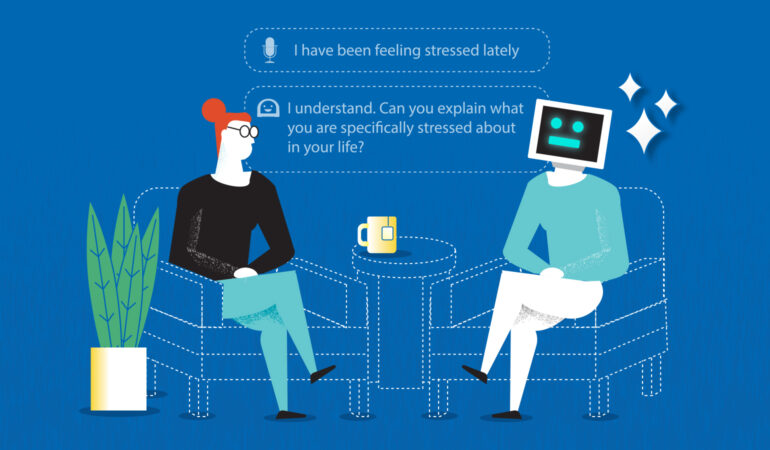
November / December 2025 Volume 25, No. 6
AI in the Therapy Room: A Client’s Need for Informed Consent
Recently, an acquaintance of an acquaintance (let's call her Dina) heard that I was a therapist and an educator and asked if she could chat with me (this write-up was approved by her). She shared that she discovered her therapist was using AI to partially conduct their sessions. While I won't go into how the [...]
Read More
January / February 2026
How Can Marriage and Family Therapists Help Racially and Ethnically Minoritized Individuals Navigating Online Dating?
It's like a really big pimple, where it's there but you don't want to point it out. You hope the other person doesn't point it out. — A 21-year-old interview participant offered this metaphor to describe his experience as a person of color on dating apps. The image is vivid, like something visible, uncomfortable, impossible [...]
Read More
September / October 2025 Volume 24, No. 5
Migraine and the Bidirectional Connection to Mental Health Disorders
A Beginner’s Guide for Mental Health Professionals and Allied Fields Affecting millions of people worldwide, migraine is considered one of the top 10 most disabling medical conditions by the World Health Organization (WHO). The condition has an estimated worldwide prevalence of 15-18% (Khan et al., 2021), including over 37 million Americans (American Migraine Foundation, [...]
Read More