

March / April 2024 Volume 23, No. 2
When “Miracles” Aren’t Possible: Careful Considerations When Working with a Client or Family with a Disability
I stopped seeing my therapist because she kept stating that my Autism was a ‘problem’ or asking me what life would be like without it. It started to make me feel bad about myself. Much like working with any diverse population, when working with clients with a physical, developmental, or intellectual disability, our language needs [...]
Read More
January/February 2024 Volume 23, No. 1
Supporting Daughters of Latin American Immigrants Navigating Higher Education
A topic seldom discussed is the challenges that daughters of Latin American immigrants face and overcome when seeking higher education. Studies have shown there has been an increase in Latin women pursuing higher education than in previous years (Mora, 2022). Despite the growing numbers, attainment of degrees often stays the same due to the incompletion [...]
Read More
January/February 2024 Volume 23, No. 1
Beyond Our Struggles: Addressing Stereotypes in Latinx Families
In 2020, the U.S. Latinx population reached 62.1 million, constituting 19% of the entire American population. This positions it as the second-largest racial or ethnic group in the nation, following White Americans, as reported by the U.S. Census Bureau (2021). Since 1970, when Latinx people made up 5% of the U.S. population and numbered 9.6 [...]
Read More
January/February 2024 Volume 23, No. 1
From Adversity to Empowerment: Using Ancestral Stories to Guide Latinx Therapy
The Latinx community finds richness in the art of storytelling folk traditions that have shaped many Latin-American countries since the times of their independence from Spain in the 19th century (Miller, 2004). As bilingual marriage and family therapists (MFTs), supervisors, and instructors at a Hispanic-serving institution, we have witnessed the relevance and power of using [...]
Read More
November / December 2023 Volume 22, No.6
Making Social Justice “Stick”
Social justice is a term that is frequently heard in marriage and family therapy (MFT) training programs. However, there is evidence that suggests that even when social justice is taught and discussed in the learning environment, it doesn’t end up in practice later (Bell, 2007; Almeida et al., 2008; Nixon et al., 2010) How can [...]
Read More
November / December 2023 Volume 22, No.6
Increasing Belongingness for the Future of MFT Programs, the Field, and Our Association
Social, environmental, and contextual stressors can lower students’ academic pursuit for post-secondary education and professionals’ engagement with the field and AAMFT, and often create barriers to success. I [NI] believe within the field of marriage and family therapy, the question of “why it matters who the services come from?” needs to be addressed in depth [...]
Read More
November / December 2023 Volume 22, No.6
Indigenizing the Workforce and Workplace
When I was a newly licensed therapist, nearly 20 years ago, it was even rarer to have access to an Indigenous mental health provider. As a marriage and family therapist, I often heard comments like: “It is so easy to talk to you,” “You understand me,” and “You are not judging me.” These comments were [...]
Read More
November / December 2023 Volume 22, No.6
Growing Diversity in the Field of Marriage and Family Therapy
Marc Fernandez, an internship coordinator for Iona University's Marriage and Family Therapy Program, as well as an adjunct professor, and Christiana Awosan, associate professor, recently sat down for a discussion about growing diversity in the profession and, in general, ways in which they have seen an increase in the diversity of their student populations. A [...]
Read More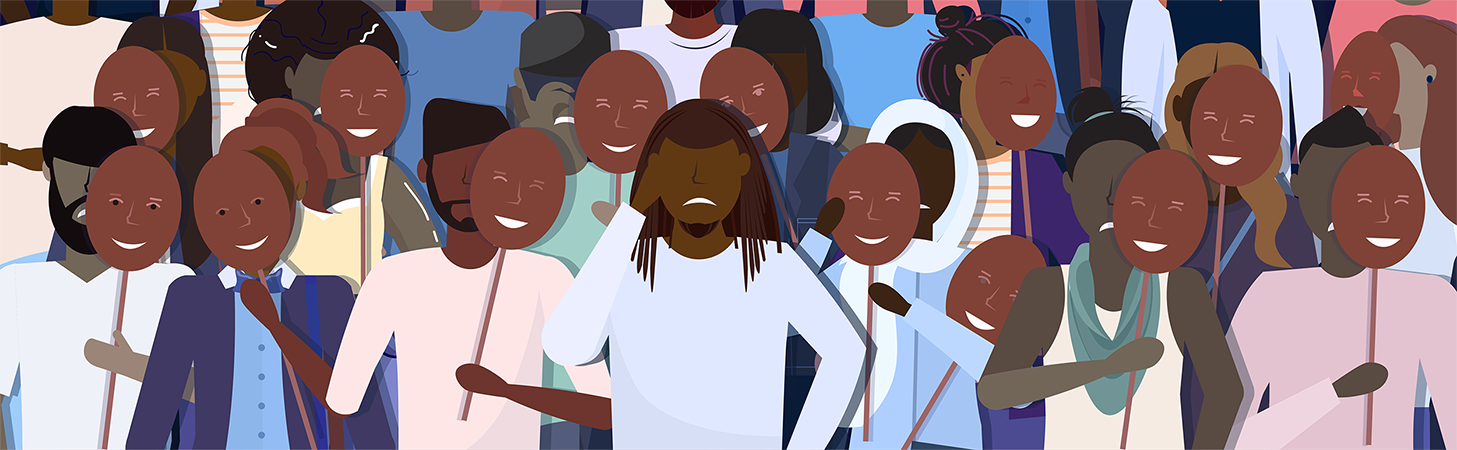
September / October 2023 Volume 22, No. 5
Smile Through the Pain: The Complexities of Narratives about Mental Health in the Black Community
The perception of mental health in the Black community is multifaceted. There are systemic challenges related to mental health that continue to stand as a barrier to receiving mental health services. Some of these barriers include accessibility of culturally competent providers, cost and/or lack of insurance to see a provider, and historical and present discriminatory [...]
Read More
September / October 2023 Volume 22, No. 5
Culturally Informed Emotionally Focused Therapy with African American Couples
Approximately one-third of African American couples in the United States are married. However, research indicates this population tends to experience higher rate of divorce, martial dissatisfaction, and single-parent households, when compared to other racial groups (St. Vil et al., 2019). One may ask, what patterns are we seeing with African American couples that lead to [...]
Read More