

August 2026
Not That Kind of Doctor: What a Mass-Casualty Drill Taught Me About First Responders
What a mass-casualty drill taught me about first responders, the families who love them, and the cost of going numb I went into the training thinking the hard part would be the classroom. Three days of FEMA hospital emergency-responder protocols: decontamination sequences, triage categories, and the federal standard of four people per litter. I'm a [...]
Read More
August 2026
Dostoevsky’s The Adolescent: Wealth, Class, and the Cultivation of a Psychologically Healthy Self – A Systemic Approach to Treatment
In The Adolescent (1875), Fyodor Dostoevsky gives us Arkady Dolgoruky, a young man trying to locate his center of gravity while orbiting a family system organized around wealth, power, and the capricious authority of a charismatic father. Arkady’s psychic and relational life is distorted by a persistent conflation: his father is his father’s money, and [...]
Read More
July 2026
Clinical Approaches to Psychotherapy: Distinctive Features, Common Ground
Because there is so much confusion about the multitude of modalities and differences among clinicians providing psychotherapy, the following will briefly describe some common approaches, rooted in psychoanalytic origins, with a focus on the unique contributions of the systemic perspective of marriage and family therapy training. This will also describe some distinctive features of the [...]
Read More
July 2026
Turning Down the Heat at Home: How Family Mediation Helps Resolve Conflict Before It Breaks Relationships
Adult siblings not speaking, parents and children at odds, tensions rising over decisions that feel impossible to agree on. Conversations turn into arguments. Small issues become symbolic of something bigger. Everyone feels misunderstood. And eventually, someone mentions lawyers. Family conflict rarely starts with a single issue. More often, it builds slowly during periods of transition—when [...]
Read More
July 2026
From Shadows to Strength: Exploring Family, Relationships, Self, and the Making of the Therapist
Friedrich Nietzsche once said, “Family love is messy, clinging, and an annoying repetitive pattern, like bad wallpaper.” My family has carried patterns as ugly as bad wallpaper, including intergenerational scripts of anger, estrangement, and survivalism that repeated themselves with paralyzing predictability. But like wallpaper, patterns can be stripped away and replaced with something new, something [...]
Read More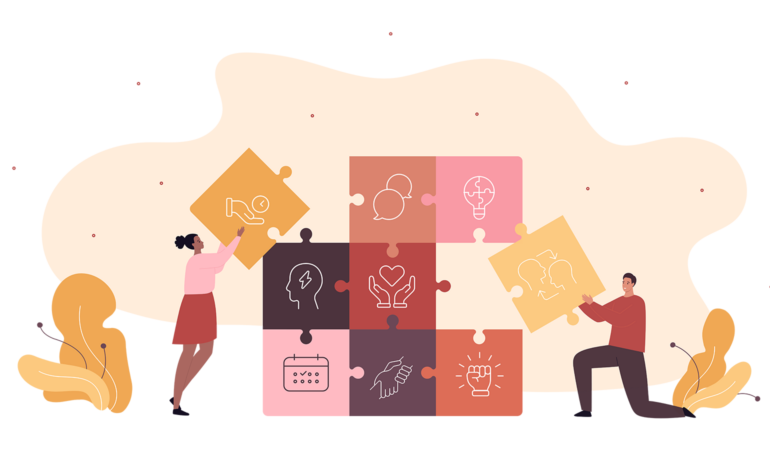
April 2026
Optimizing MFT Professional Socialization Development: Using the 4C Assessment Model in Supervision
Supervision is a crucial aspect of the development of competent, ethical marriage and family therapy (MFT) professionals providing quality client care in practice. Supervision is an ongoing professional relationship focusing on MFT clinical skills development, often including strengthening systemic thinking through case conceptualization, teaching and supporting clinicians’ use of systemic models and interventions in their [...]
Read More
April 2026
High-Conflict Communication in Blended Families: Helping Everyone Feel Heard Without Escalating Conflict
After a divorce or separation, clients can feel as though everything is a fight. It isn’t that they are high-conflict people. More often, they have developed a pattern of communication in which conflict is expected before the conversation even begins. Now add the complexities of a second relationship and additional children, and the dynamics of [...]
Read More
January / February 2026
Friendship, Partnership, and Love Affair: Helping Couples Navigate the Differences so They Can Thrive Together
I see a committed relationship as having three aspects: friendship, business partnership, and love affair. Friendship is liking/respecting/enjoying a partnership, enjoying time and activities together, and, hopefully, having adventures. Business partnership is about logistics running a household (shopping, cleaning, cooking, managing money, cars, etc.), and parenting, whether that’s children and/or pets. A love affair is [...]
Read More
January / February 2026
When Family Therapists Go Back Home to Their Families: Notes from an Autoethnographic Practice
Family therapists can spend a lifetime studying theories about family patterns, intergenerational communication, recursive loops, and the dance between closeness and separateness, to name a few. During our training, we are taught to map triangles, track emotional processes across decades, and listen for the stories that shape a person’s sense of personhood. And yet, family [...]
Read More
November / December 2025 Volume 25, No. 6
Master’s in Marriage and Family Therapy: What Are We Fit For?
This question has been at the forefront of my mind as I began my job search during the final semester of my Master’s program in Marriage and Family Therapy, where I graduated with a CGPA of 3.97 from a COAMFTE-accredited program at a popular New York–based university. The program offered more than academic excellence—it fostered [...]
Read More